The Supplemental Nutrition Assistance Program (SNAP) now requires beneficiaries to meet updated work and citizenship standards.
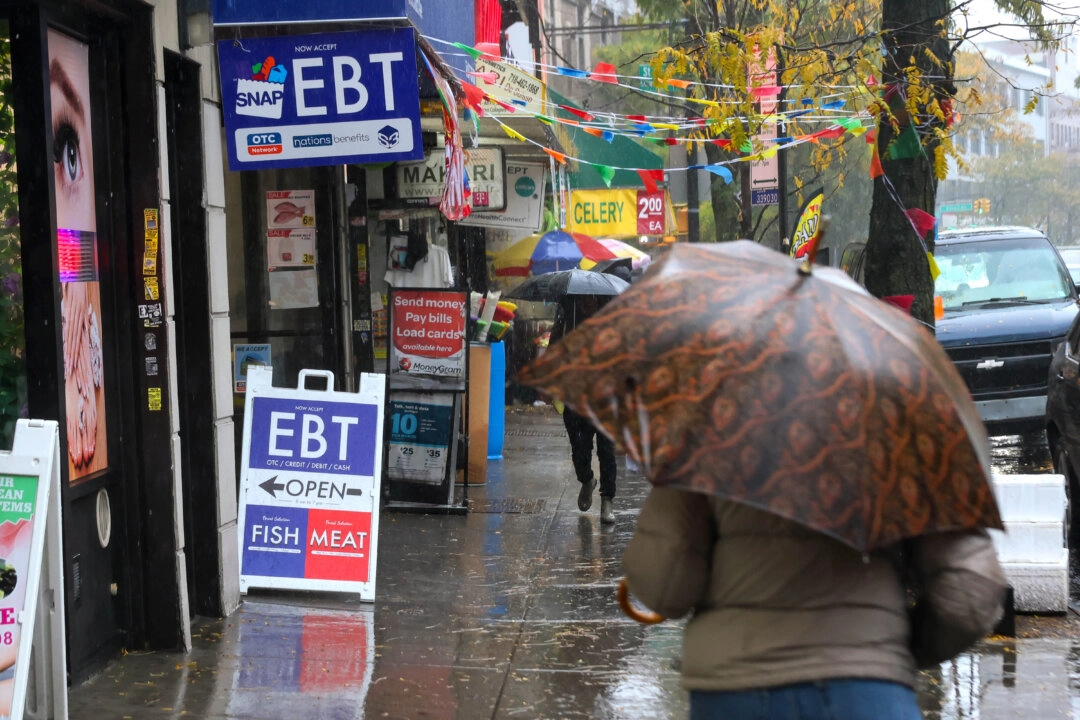
The Supplemental Nutrition Assistance Program (SNAP), commonly referred to as food stamps, has begun implementing stricter eligibility requirements and other changes under a federal law passed in July.
Beneficiaries must meet new work and citizenship requirements in order to receive help from the government-funded program, according to the U.S. Department of Agriculture.
The new guidance was part of the One Big Beautiful Bill Act of 2025 (OBBBA), which was signed into law on Independence Day.
SNAP’s update was supposed to take effect no later than Nov. 1, 2025. It was delayed due to the historic government shutdown that paused benefits for millions.
Non-Citizen Eligibility
The program, which has exploded in size since its inception in 1964, will only be offered to U.S. citizens, U.S. nationals, lawful permanent residents (also known as Green Card holders), Cuban and Haitian entrants, and Compact of Free Association (COFA) citizens, according to a breakdown provided by the USDA.
Refugees, individuals granted asylum, Afghan nationals, Ukrainian nationals, and people who have had their deportation withheld are now “not eligible,” said the guidelines provided by the USDA. Those groups had been “eligible immediately,” until the OBBBA was signed into law.
Parolees, who used to be eligible after a five-year waiting period, also no longer qualify.
The Epoch Times
All SNAP Beneficiaries Will Need to Reapply for Benefits: Agriculture Secretary
The Epoch Times
5,000 Dead People Getting SNAP, 500,000 Receiving Benefits Twice: Rollins
More than 41 million people have been utilizing SNAP to buy groceries, according to 2024 data from the Center for Budget and Policy Priorities.
New Mexico has the highest participation rate with 21.2 percent of the population enrolled in SNAP. Utah has the lowest percentage of residents using the program, at 4.8 percent.
Work Requirements
The new guidelines in the OBBBA will require able-bodied adult beneficiaries without dependents to work, volunteer, or take part in training for at least 20 hours per week, or 80 hours per month, if they want to keep their food stamps.
If they do not prove that they are working, volunteering, or training during the applicable time periods, they will only receive SNAP benefits for three months within a three-year period.
People over 64 will be exempt from these requirements.
Nearly four million people enrolled in the program are considered to be able-bodied adults without dependents, according to Robert Rector, a senior researcher at The Heritage Foundation.
When Does This Start?
The new SNAP rules are in effect now, and all new applicants must satisfy the eligibility criteria.
Households already receiving benefits will be reviewed and will have to show they are eligible when they seek to have their benefits recertified.
Will People Have to Reapply?
Agriculture Secretary Brooke Rollins stated that the Trump administration wants all beneficiaries to reapply following fraud concerns in the program after an audit revealed that SNAP money was being sent to 200,000 dead people in 29 states.
“It’s going to give us a platform and a trajectory to fundamentally rebuild this program, have everyone reapply for their benefit, make sure that everyone that’s taking a taxpayer-funded benefit through SNAP or food stamps, that they literally are vulnerable, and they can’t survive without it,” Rollins told Newsmax’s “Rob Schmitt Tonight” on Thursday.
But Rollins did not share additional details about how—or when—such a program would be implemented.
Net Monthly Income
A person’s net monthly income and household count are also considered eligibility factors.
For example, to qualify for SNAP benefits, a household of four people can not earn more than a gross monthly income of $3,483, according to the new guidelines.
This limit was raised slightly from the year prior, which capped off net monthly income limits at $3,380.
The maximum net monthly income is slightly higher in high-cost states such as Alaska and Hawaii.