us
4 min(s) read
Top White House economist provides latest update on Trump's plan to give $2,000 to almost every American - and it's good news
Author Image
James K
President Trump could soon push a bold new plan that would put $2,000 in the pockets of millions of Americans - all thanks to tariff revenue.
According to National Economic Council Director Kevin Hassett, the White House is eyeing a proposal to send out hefty rebate checks funded by tariffs imposed during Trump’s presidency.
The idea, first floated back in July, has picked up momentum in recent months as the administration boasts about economic gains tied to its aggressive trade policy.
Proposal hinges on congressional approval
Appearing on CBS’s Face the Nation, Hassett said: “I would expect that in the new year, the president will bring forth a proposal to Congress to make that happen.”
While the plan could prove popular among Americans eager for a financial boost, Hassett stressed that Congress will ultimately have the final say.
"It could come from tariff revenue, but in the end, we get taxes, we get tariffs, we get revenue from lots of places, and then Congress decides how to spend those monies,” he said.
“That’s an appropriation. And so, this would have to be money that would be an appropriation.”
Treasury Secretary Scott Bessent previously told Fox News that the checks would likely be targeted toward households making less than $100,000. "It remained in discussion" at the time, he said.
Hassett echoed that sentiment, explaining that the money would likely be delivered through the tax code, requiring lawmakers to authorize the payments via new legislation.
“We’ve had a couple of quarters of almost 4% growth, we’ve got a big government surplus actually running for a few months in a row, the deficit relative to last year is down by $600 billion,” Hassett said.
“And so, in the summer, I wasn’t so sure that there was space for a check like that.
"But now I’m pretty sure that there is.”
Still, not everyone in Washington is convinced.
Republican Sen. Ron Johnson of Wisconsin warned last month that the country “can’t afford” such a proposal.
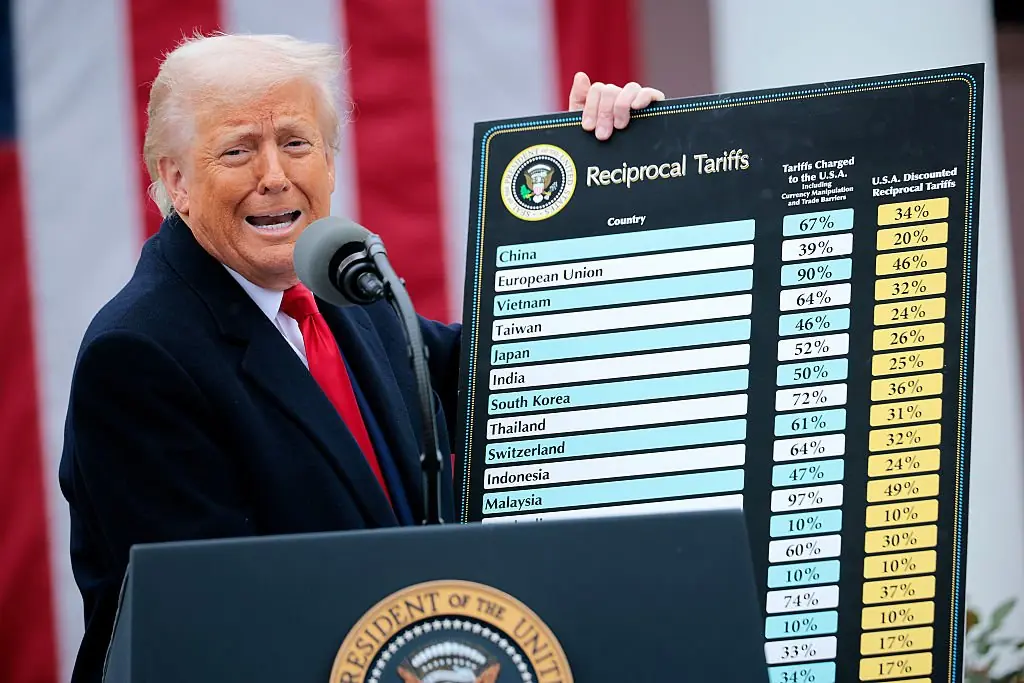
Trump touts tariffs as a financial weapon
President Trump has long championed tariffs as a key strategy for boosting American industry and bringing in fresh government revenue. And it appears the numbers are starting to reflect that.
Through the first three quarters of the year, the Treasury Department raked in $195 billion in tariff duties, according to its September financial report.
However, the cost hasn’t come without consequences. As of November 17, consumers were dealing with an average effective tariff rate of 16.8 percent - the highest since 1934. That’s a 14.4 point jump since early January, per data from the Yale Budget Lab.
While the administration has touted the success of tariffs, it’s also begun to acknowledge areas that may need adjustments.
“So there’s a lot of success to crow about in the tariff space,” Hassett said.
“But there are also things that we’re hearing, when we talk to people like trading partners and companies that trade a lot in the U.S., there are also things that maybe could be adjusted.”
Hassett added: “There’s an appetite to exempt things if they’re really not meant to be made in the U.S.,” citing climate and other practical factors. U.S. Trade Representative Jamieson Greer is reportedly leading that review process.
Hawley’s $600 rebate plan adds pressure
As talk of Trump’s $2,000 checks gains traction, Republican Senator Josh Hawley has already put forward his own rebate plan.
Back in July, he introduced legislation that would provide $600 checks to most Americans and their dependent children. Under that proposal, a family of four would pocket $2,400.
Trump added fuel to the fire last month by posting online that a “dividend of at least $2,000 a person (not including high income people!) will be paid to everyone.”
Hassett’s latest remarks suggest the White House sees more than just political upside to the plan. “Most of the tariffs put in place this year have proven their mettle,” he said, crediting them for robust growth, reduced imports from China, and a shrinking trade deficit.
The administration is also watching the Supreme Court closely, as justices consider whether the president has the legal authority to impose such sweeping tariffs under federal emergency powers. Hassett expressed confidence in the outcome: “We really expect the Supreme Court is going to find with us.”