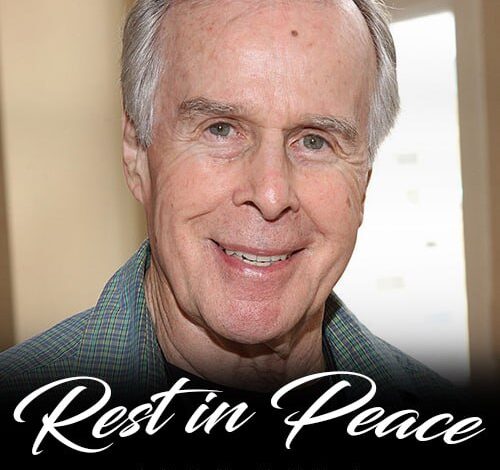
The curtains have closed on the final act of a legendary theatrical life. John Cunningham, the quintessential character actor whose refined presence and versatile voice graced the American stage and screen for nearly seven decades, has passed away at the age of 93.1 His family confirmed that he died peacefully on a Tuesday morning at his beloved home in Rye, New York—a residence famously situated beside the 11th hole of the Rye Golf Club, where the actor spent his off-hours reflecting on a career built not on the fleeting whims of celebrity, but on the enduring foundation of craftsmanship.2+1
Cunningham was often described as a “working actor’s actor,” a title he wore with immense pride. In an industry that frequently prioritizes the spectacular and the scandalous, he was a bastion of consistency and quiet dignity. He understood that the true heart of performance lay in the repetition and the constant pursuit of perfection. As he told Playbill in 1997, “In theater you get to do it again, and again, and again. My whole pleasure is trying to get better… Be prepared to be alive.” This philosophy of living in the moment guided him from his earliest days in rural New York to the bright lights of Broadway and the high-pressure sets of major motion pictures.
Born on June 22, 1932, in New Paltz, New York, Cunningham was the son of a high school principal, a background that likely contributed to the air of authority and intellectual rigor he brought to many of his roles. After graduating from Dartmouth College, his path to the stage took an unconventional detour through the United States Army.3 It was here, while stationed in Europe, that a fortuitous reassignment placed him in an acting troupe tasked with entertaining the troops. This experience solidified his calling, leading him to earn a master’s degree from the prestigious Yale Drama School. It was at Yale that he formed a lifelong bond with classmate Dick Cavett, a friendship that would endure throughout their parallel rises in the entertainment industry.
Cunningham’s professional ascent was nothing short of meteoric. In 1960, at the age of 27, he achieved a feat that remains the envy of aspiring actors: before he had even secured an agent, he was cast by the legendary director Moss Hart.4 He took on the role of Zoltan in the national and international tours of My Fair Lady, while simultaneously serving as the understudy for the formidable Henry Higgins.5 It was a baptism by fire that prepared him for a Broadway career spanning 15 major productions. His résumé serves as a chronological map of modern American theater, including original or key roles in masterpieces such as Company, Cabaret, Zorba, 1776, Titanic, and The Sisters Rosensweig.+1
Perhaps his most celebrated stage contribution was his portrayal of Flan Kittredge in the original production of Six Degrees of Separation (1990–1992).6 He embodied the sophisticated, art-dealing patriarch with such nuance that he became synonymous with the role, eventually reprising it in the 1993 film adaptation alongside Donald Sutherland. His stage journey finally came to a poignant conclusion in 2012 at the age of 80, when he appeared in Painting Churches, marking the end of fifty-two years of live performance.
While the theater was his primary residence, the silver screen made him a household face. Cunningham possessed a rare ability to elevate supporting roles into memorable cinematic moments. Audiences of the 1980s and 90s will forever remember him as the quintessential authority figure. He played the buttoned-up, traditional father in the cult classic Mystic Pizza (1988) and the stern yet deeply loving father to Ethan Hawke’s character in the Academy Award-winning Dead Poets Society (1989). His filmography expanded to include high-profile projects like School Ties, Nixon, The Jackal, and Shaft. Often cast as corporate titans, politicians, or imposing fathers, Cunningham infused these roles with a hidden warmth and a humanizing vulnerability that prevented them from becoming mere caricatures.
His vocal talents were equally sought after. Whether he was portraying the motivational voice on the “How to Be a Man” tape in the comedy In & Out or serving as the booming Fed Net announcer in the sci-fi epic Starship Troopers, his voice carried an unmistakable gravitas. The New York Times encapsulated his career perfectly in 1986, describing him as “ever-reliable and ever-employed.” For Cunningham, this was the highest form of flattery. He famously joked that he had “never worked a day” in his life because he loved the labor of acting so deeply.
Cunningham’s influence extended far beyond the footlights of Manhattan. He was a pillar of his community in Rye, New York, where he resided for decades. In 1989, alongside fellow acting luminary Frances Sternhagen, he co-founded the Playwrights and Players series. This initiative brought world-class playwrights to Rye High School, bridging the gap between professional theater and local education while raising vital funds for arts programs. He believed that the arts were a communal responsibility, a belief he practiced with the same dedication he applied to his scripts.
His television career was a testament to his versatility and the industry’s trust in his talent. He appeared in the Law & Order franchise an astounding eight times, playing different characters with such conviction that audiences rarely realized they were seeing the same actor. His guest appearances spanned modern hits like 30 Rock, The Good Wife, and Damages, as well as a long tenure in the world of daytime soap operas, ensuring his face remained a constant in the lives of viewers across all demographics.7
At the center of his long and fruitful life was his family. John was married for nearly 70 years to Carolyn Cotton Cunningham, a woman whose own legacy as a Rye City Council member and environmental advocate matched his in spirit and impact.8 Carolyn was at his side, holding his hand, as he passed away on Tuesday. He is survived by his wife, their three children—Christopher, Catherine, and Laura—as well as six grandchildren and two great-grandchildren.
John Cunningham’s life was a masterclass in the art of the character actor. He proved that one does not need to be a “star” to be a luminary. By dedicating himself to the small details, the repeated rehearsals, and the quiet pursuit of excellence, he became an essential thread in the fabric of American culture. He never chased the flickering light of fame, and in doing so, he achieved something far more permanent: the universal respect of his peers and the quiet gratitude of an audience that felt they knew him, even if they only ever saw him through the eyes of the characters he so brilliantly brought to life. He leaves behind a legacy of integrity, a reminder that to be “ever-reliable” is perhaps the most radical and beautiful thing an artist can be.