The collision happened on a Tuesday morning on Interstate 95, somewhere between the office and a board meeting that Victoria Hale had been mentally rehearsing for days. One moment she was checking her phone at a red light. The next moment, a delivery truck ran the light, and her world became a chaos of twisted metal and breaking glass.
Victoria Hale, the forty-eight-year-old CEO of Hale Global, a company worth over two billion dollars, was rushed to Metropolitan Hospital’s ICU with injuries that the doctors described in careful, clinical language: “severe trauma,” “multiple fractures,” “significant head injury.” Her prognosis was listed as “guarded.” Translation: nobody knew if she would wake up.
But Victoria was awake.
Nobody realized it, but she was completely, utterly awake.
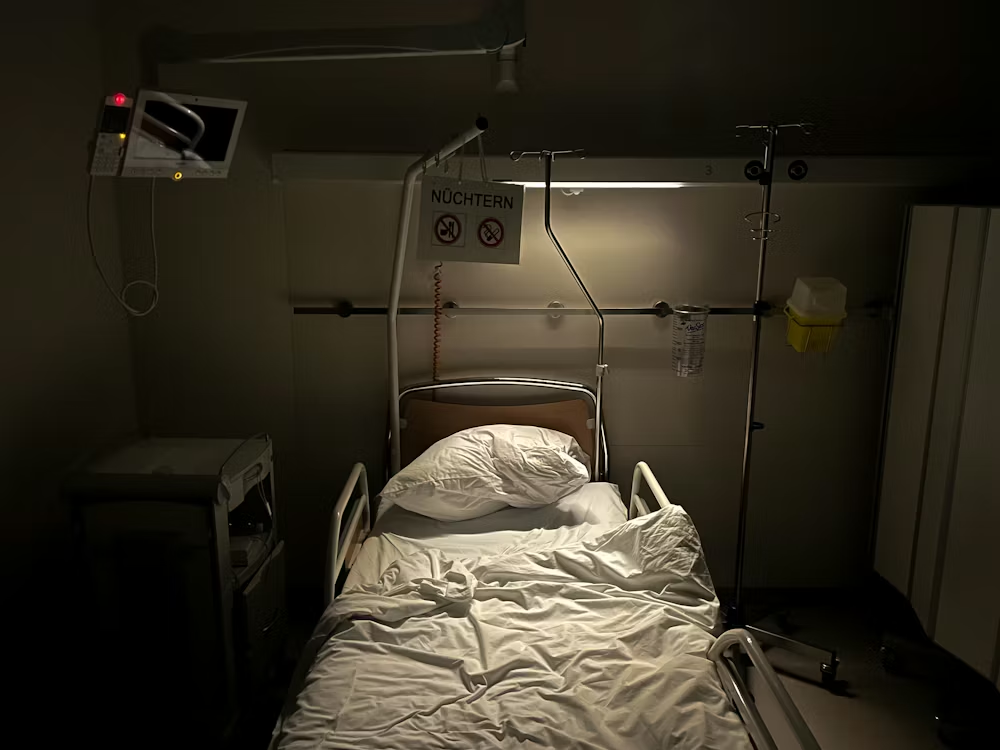
Her body lay motionless in the hospital bed, surrounded by machines that monitored her heartbeat and oxygen levels and brain activity. The ventilator tube down her throat prevented her from speaking. The injuries to her spinal cord prevented her from moving anything below her neck. The doctors had run the standard tests and concluded that even if she survived, she would likely be a shell—permanently unconscious, permanently dependent, permanently gone.
But her mind was clear. Crystalline. In the darkness of her immobilized body, Victoria’s consciousness was perfectly sharp.
And that was when she made a decision that would change everything.
The Woman Who Built An Empire On Fear
Victoria Hale had never believed in trust.
That belief had served her well for twenty years. She’d risen from a middle management position to CEO through a combination of calculated risk-taking, ruthless efficiency, and an absolute refusal to allow personal relationships to interfere with business. She’d mastered the art of the power move. She’d learned to read people like they were financial statements—identifying their weaknesses, their vulnerabilities, their price.
In business, she inspired fear. Fear made people obedient. Fear made them work late nights. Fear made them compete with each other instead of conspiring against her. Fear kept the empire functioning exactly the way she wanted it to function.
In life, she stood alone. By design. She’d never married. She had no children. Her family relationships were cordial but distant. She had colleagues but not friends. She had people who worked for her, but nobody who truly knew her. The emotional armor she’d constructed over twenty years was impenetrable.
And it had worked.
Hale Global was thriving. The stock price climbed steadily. Shareholders were pleased. Competitors feared her. The business press wrote about her strategic genius and her ruthless efficiency with the kind of admiration usually reserved for generals and chess masters.
But now, lying in a hospital bed with her body refusing to respond to any command she gave it, Victoria realized something crucial: she could finally observe her empire without anyone realizing she was watching.
And what she saw terrified her.
The First Betrayal
Thomas Keller arrived two days after the accident. He was a board member—polished, intelligent, ambitious. He had a smile that made you want to trust him, which was exactly why Victoria had never trusted him.
He wasn’t alone. Linda Shaw from the finance department followed him into the room. They didn’t notice Victoria’s eyes following their movements. They didn’t realize she could hear every word they spoke.
“This is unfortunate,” Thomas said smoothly, looking down at Victoria’s motionless body without a trace of concern in his voice. “But we need to consider the company’s future. If we don’t act quickly, the market is going to react negatively to this news.”
Linda shifted uncomfortably. She’d always been decent, as far as corporate employees go. “What are you suggesting?”
“A careful restructuring of authority,” Thomas replied, his voice pitched low, almost conversational. “Victoria centralized everything. The company depends entirely on her vision. That’s actually a liability. If we present this as an opportunity to modernize the structure, to distribute decision-making power—”
He paused, choosing his next words carefully.
“—we can make this work in our favor. Publicly, of course, we honor her legacy. The market loves a fallen icon. But privately, we preserve shareholder value by ensuring the company doesn’t collapse under the weight of one woman’s absence.”
The fury that burned inside Victoria’s chest was so intense that for a moment she thought it might reignite her body. But her body remained still, perfectly still, and she continued to listen as Thomas and Linda outlined their plan to dismantle everything she’d built.
They were going to take her company. They were going to rewrite her legacy. They were going to position themselves as the saviors of Hale Global while she lay in a hospital bed, unable to stop them.
It was brilliant strategy, she had to admit. It was exactly the kind of move she would have made.
And it enraged her more than she thought possible.
The Moment Everything Changed
The door opened again on day three.
These footsteps were different—softer, more hesitant. The person who entered moved with the kind of careful respect that came from acknowledging another person’s space rather than claiming it.
It was Daniel Reed.
Her executive assistant. He’d worked for her for five years. He was quiet, precise, absolutely reliable in the small ways that kept a CEO’s life running smoothly. He scheduled her meetings, managed her calendar, ensured that she had coffee in the morning and updated briefing documents by afternoon. He was efficient and invisible, which was exactly what she’d valued in him.
She’d never thought much about his personal life. It had never seemed relevant.
He sat down in the chair beside her bed, and for a long moment, he didn’t speak. He just sat there, looking at her with an expression Victoria couldn’t quite interpret.
“Ms. Hale,” he said finally, his voice soft. “Victoria. I don’t know if you can hear me, but I needed to come.”
Of course she could hear him. She could hear everything.
“The office is falling apart,” he continued, his voice steady but with an undercurrent of something that might have been worry. “Thomas Keller is demanding access to your private accounts, your security clearances, everything. He’s saying that for continuity purposes, the company needs to consolidate power.”
Daniel leaned forward slightly.
“I refused,” he said. “I told him that I work for Victoria Hale, and until someone proves otherwise, my loyalty stays with you. I told him that access to your personal information requires your authorization, and I’m not going to give it without your explicit consent.”
He drew a breath, and Victoria heard something new in his voice. Fear, maybe. Or determination. Or both.
“They weren’t pleased,” he continued. “Thomas made it clear that if I don’t cooperate, if I don’t get out of the way, there will be consequences.”
He paused, and then his voice became quieter.
“You probably don’t remember this,” he said, “but when I interviewed for this position, you never asked how I was going to manage being a single father. You never suggested that my family situation might be a liability. You never implied that my responsibilities outside the office were somehow less important than my responsibilities to you.
Instead, you asked me one question: ‘Are you capable of doing this job?’ When I said yes, you hired me. That’s it. You treated me like a professional, not like a charity case or a risk. That job, this job, kept my daughter, Lily, and me afloat. It paid for her braces and her school supplies and everything else she needed. I won’t let them tear down what you built.”
And then he did something Victoria absolutely did not expect.
He rested his forehead gently against her hand.
For the first time in years—maybe in decades—Victoria Hale felt something close to shame. She had always seen Daniel as efficient machinery. A useful tool. Someone who managed the logistics of her day so that she could focus on the bigger picture.
But he was so much more than that. He was a man who was raising a daughter alone. He was someone who understood loyalty not as a business strategy but as a principle. He was risking his job, his income, his security—all for someone who had never asked him to, who had never even properly thanked him.
And in that moment, Victoria understood something fundamental: she had spent twenty years learning how to inspire fear, and in doing so, she had created a world where nobody would actually stand by her when it mattered.
Except for him.

The Long Wait
Over the next several days, sensation slowly began to return to Victoria’s body. She could feel her fingers now. Then her hands. Then her arms. She could open and close her eyes. She could move her head, very slightly.
She concealed all of it.
Because she needed to see how far the corruption would reach. She needed to understand the full scope of what Thomas was planning. And she needed to know whether Daniel would hold firm when the pressure intensified.
He would be tested. She was certain of that.
And on day six, he was.
Daniel arrived in the evening, his expression troubled in a way Victoria had never seen before.
“They’ve offered me a deal,” he said without preamble. “Thomas came to me personally. He said that if I sign a statement—just a simple statement about your mental state before the accident—they’ll protect my position. Actually, they’ll promote me. New title, significant salary increase, assurances that my job is secure no matter what happens.”
He ran a hand through his hair, a gesture of frustration that was so human, so real, that Victoria felt another sharp pang of recognition.
“They want me to testify that you were unstable,” Daniel continued. “That you were increasingly paranoid, increasingly difficult to work with, that your mental health was deteriorating before the accident. If I sign, they use it to argue that your judgment was already compromised, which makes it easier to transition power away from you.”
His voice trembled slightly.
“I’m scared,” he admitted. “Lily is going to need dental work soon, and the estimate is expensive. College is coming up, and I’ve been saving, but not enough. The kind of money they’re offering would change our lives. It would mean security. It would mean I could finally breathe, financially, for the first time in years.”
He looked directly at Victoria, and his eyes were clear.
“But I won’t lie,” he said firmly. “You’re tough, yes. You’re demanding, absolutely. But you’re not unstable. You’re brilliant. I won’t betray you.”
That was when something shifted inside Victoria’s carefully constructed self.
His loyalty wasn’t strategic. It wasn’t a calculated business move. It was principled. It was based on something deeper than fear or financial incentive. It was based on knowing the difference between right and wrong, and choosing right even when it was costly.
And Victoria realized that this was exactly the kind of person she should have learned to trust.
The Break
On day nine, everything accelerated.
Daniel rushed into her room, pale and shaken in a way she’d never seen before. His hands were shaking. His voice was tight with emotion.
“They moved the board vote up,” he said urgently. “It’s happening now. In literally ten minutes. They’re calling an emergency session to declare you permanently incapacitated. Once they do that, they have the legal authority to remove you from your position entirely.”
He gripped the rail of the hospital bed, his knuckles white with tension.
“I tried to stop it,” he continued, his voice cracking. “I told them it was premature, that you needed more time, that declaring someone permanently incapacitated without a full medical evaluation is ethically questionable. But nobody listened. Thomas has the votes. They’re going to push this through.”
He paused, and the next words came out barely above a whisper.
“And they fired me. I just got the notification fifteen minutes ago. Effective immediately. They said my interference in the transition was disruptive to the restructuring process. They’re replacing me with someone who will cooperate.”
Silence filled the room.
Then something shifted beneath the hospital sheets.
Daniel’s eyes widened as Victoria’s fingers curled. Deliberately. Intentionally. With clear, conscious purpose.
Her eyes opened—sharp, focused, blazing with authority despite the weakness in her body.
“I heard it all,” she whispered, her voice rough from disuse but crystal clear. “Every word. For nine days.”
“Victoria, don’t—” Daniel started, but she was already reaching for the ventilator tube.
The pain of removing it was intense, but she pushed through it, gasping as she cleared her airway.
“Wheelchair,” she ordered, her voice gaining strength with each word.
It took ten minutes and three hospital staff members to get her into a wheelchair. Her body screamed in protest at every movement. But adrenaline and fury were powerful medicines, and Victoria Hale had never met an obstacle she couldn’t push past.
The Return
Thomas Keller stood at the head of the boardroom table, surrounded by board members with their laptops open and their expressions serious. He was in the middle of his carefully prepared speech about “unfortunate circumstances” and “necessary transitions.”
“—and so, for the company’s future,” he was saying smoothly, “we must act decisively—”
The doors flew open.
Every head turned.
Victoria Hale, pale and visibly weakened but undeniably present, sat in a hospital wheelchair, framed in the doorway like a ghost refusing to be haunted away. She was still wearing a hospital gown. She was still recovering from catastrophic injuries. She was still probably violating at least a dozen medical recommendations.
But her presence in that room was absolute.
“Please,” she said calmly, rolling forward into the room, “go on. I’m fascinated to hear what I supposedly would have wanted.”
No one spoke.
The silence was the kind of silence that happens when people realize they’ve made a catastrophic miscalculation.
“I’ve been conscious for nine days,” Victoria continued, her eyes moving methodically around the table. “I heard the manipulation. The threats to employees who refused to cooperate. The plans to restructure authority in ways that have nothing to do with what’s best for the company and everything to do with what’s best for you.”
Her gaze locked on Thomas.
“You’re terminated,” she said, her voice soft but carrying the weight of absolute authority. “Effective immediately. Security will escort you out of the building. You will not contact clients, employees, or anyone else associated with this company. If you do, my legal team will respond accordingly, and I promise you, Mr. Keller, they are very good at their jobs.”
Thomas stood up, his face flushed. “You can’t—”
“I can,” Victoria said simply. “And I am. Meeting adjourned. Everyone except Daniel and my Chief Medical Officer is excused. The rest of you can expect official communication regarding the restructuring by end of business tomorrow. It will not include any of the changes you proposed.”
Security escorted Thomas out. The other board members filed out quietly, with the kind of subdued expressions that came from watching their carefully laid plans collapse in seconds.
The room cleared except for Victoria, Daniel, and the hospital’s Chief Medical Officer—who was pale and clearly wondering if he was about to lose his medical license for allowing a patient to leave intensive care.
“I will take full responsibility for discharging myself,” Victoria said to him immediately. “I’ll sign whatever waivers you need. But I’m going back to work.”
“You should be in the ICU,” the doctor protested weakly.
“I should be dead,” Victoria replied. “But I’m not. So I’m going to work.”
The Transformation
In the elevator on the way back down, Victoria looked at Daniel differently than she’d ever looked at him before.
“Thank you,” she said simply.
“I was just doing my job,” he replied, his voice still shaky from the adrenaline of the past hour.
“No,” Victoria said. “You chose character over comfort. You risked your livelihood for someone who had never asked you to, who had never even properly valued you. That’s not your job. That’s integrity.”
The elevator descended quietly, and when it reached the ground floor, Victoria made a decision that would reshape her company and her life.
“Starting tomorrow,” she said, “you’re no longer my assistant.”
Daniel’s face fell. “You’re firing me?”
“No,” Victoria said, allowing a rare smile to touch her lips. “I’m promoting you. Chief Operating Officer. I need someone I trust. Someone who understands that loyalty isn’t a weakness but a foundation. That’s you.”
He stared at her, speechless.
“And bring Lily by the office sometime,” Victoria added as the elevator doors opened to sunlight streaming through the hospital’s glass lobby. “I’d like to meet the young woman who helped shape such a decent man.”
The Rebuild
It took three months for Victoria to fully recover. Physical therapy was brutal. There were days when she questioned whether she’d made the right choice in returning to work so quickly. There were moments of doubt, of pain, of exhaustion so profound that she wanted to give up.
But every time those moments came, she thought about Daniel. About his quiet loyalty. About the choice he’d made to do the right thing even when it was costly.
And she kept going.
The company restructuring happened in stages. Thomas’s faction was gradually removed from positions of authority. New leadership was brought in—people chosen not just for competence but for integrity. The corporate culture began to shift from one based on fear to one based on trust.
It was slower. It was messier. But it was also more stable. People worked harder when they felt valued. They took risks when they trusted leadership. They built something that lasted instead of something that was designed to benefit the people at the top.
Daniel excelled as COO. He was conservative where Victoria had been aggressive, thoughtful where she had been impulsive. They balanced each other perfectly. And the company, rather than suffering from Victoria’s absence during recovery, actually flourished under his influence.
One day, about six months after the accident, Victoria was reviewing quarterly reports when Daniel came into her office. He wasn’t alone. A teenage girl stood beside him—tall, with his dark hair and his intelligent eyes.
“Lily wanted to see where I work,” Daniel said. “I told her about what happened, about the accident. She wanted to meet you.”
Lily stepped forward, her hand extended. “My dad talks about you all the time,” she said. “He said you came back to work from the ICU to save the company from people who were trying to steal it.”
Victoria stood up and shook her hand. “Your father is the one who saved the company,” she said. “I just gave him the title to match what he’d already proven.”
Later, when Lily had left, Victoria and Daniel sat in comfortable silence, looking out over the city from her office window.
“The accident was meant to end me,” Victoria said finally. “I thought it was going to be the thing that destroyed everything I’d built. Instead, it revealed the truth.”
“What truth?” Daniel asked.
“That I had built my empire on control,” Victoria said. “On fear. On the assumption that trust was weakness. And maybe that worked for a while. But the moment I couldn’t control things anymore, the moment I was completely powerless, I realized that the only thing that actually mattered was the people who chose to stand by me anyway.”
She turned to face him.
“You chose that,” she said. “And that choice changed everything. Now I’m going to rebuild this company on trust. On the belief that people will do the right thing not because they’re afraid but because it’s the right thing.”
“Do you think it’ll work?” Daniel asked.
Victoria smiled.
“I think it already is.”
What Do You Think About Victoria’s Journey?
This is a story about a powerful woman who had to lose control to finally understand what real power actually is. Was Victoria’s transformation believable? Do you think she would actually change, or was this just a moment of crisis-driven gratitude? Share your thoughts in the comments below and let’s discuss what it means to build something on trust instead of fear, and whether people can really change when they finally see the world from a different perspective.
If you’ve ever worked for someone who led through fear, or if you’ve learned the hard way that loyalty matters more than compliance, please share this story with your friends and family. We need more conversations about leadership that’s based on trust instead of terror, about the value of integrity in a competitive world, about the courage it takes to build something that lasts. Sometimes the most powerful thing a leader can do is finally see the people around them and understand what they actually deserve.
Let’s talk about real leadership. Let’s talk about trust. Let’s talk about the moments when we finally understand what actually matters. Your voice matters. Share this article. Tell your own story.