Six months ago, my entire life split cleanly into two distinct chapters: before and after. Before, I was a seventy-one-year-old woman enjoying a quiet retirement in my small house in Pennsylvania, tending to my garden and occasionally babysitting my four grandchildren. After, I became the sole guardian and parent to those same four children, trying desperately to hold together the shattered pieces of our family.
My daughter Darla and her husband Robert were traveling to Chicago for a business conference when their plane went down. Mechanical failure, the investigators said later. Engine problems that couldn’t be corrected in time. No survivors. Just like that—in the span of a few terrible seconds—they were gone from this world, leaving behind four confused, grieving children who couldn’t understand why Mommy and Daddy weren’t coming home.
I became both mother and grandmother overnight to Lily, who was nine years old and suddenly trying to be brave for her younger siblings. Ben was seven, quiet and withdrawn in his grief. Molly had just turned five and kept asking questions I didn’t know how to answer. And little Rosie, at four years old, was still too young to fully comprehend the concept of death, still waiting by the window some evenings for parents who would never return.
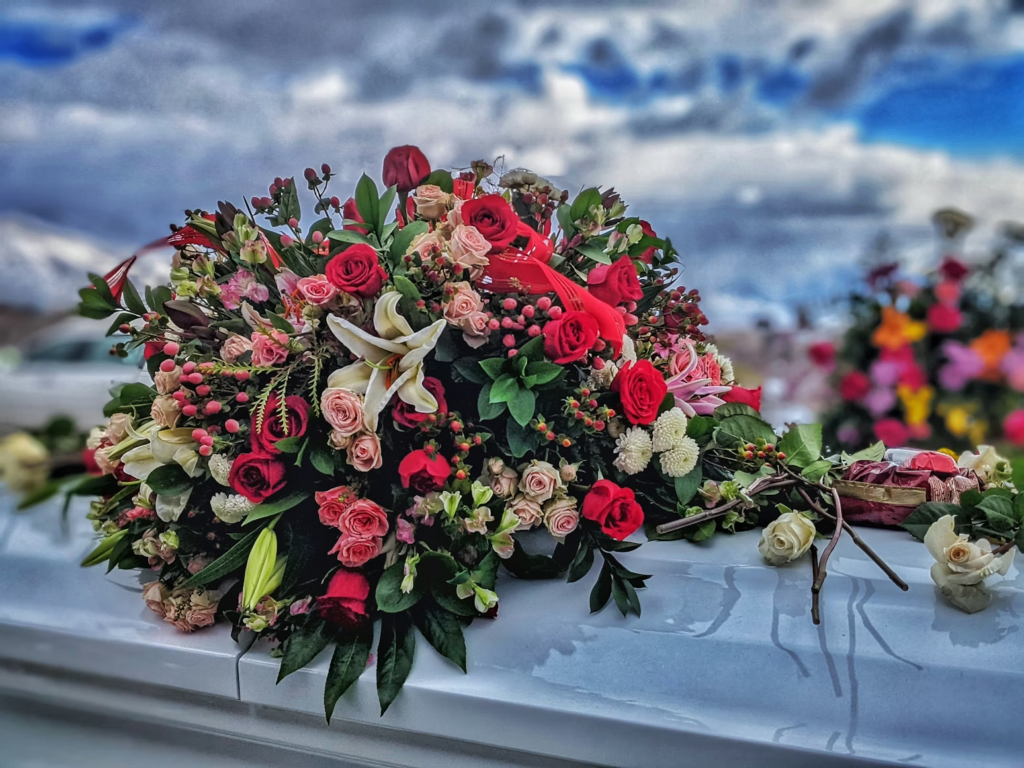
Those first few weeks after the funeral were absolutely unbearable in ways I can barely put into words. The children cried at night, their small voices calling out for their mother in the darkness. Lily stopped eating regularly, pushing food around her plate with haunted eyes. Ben started wetting the bed again for the first time in years, ashamed and confused by his body’s regression. And Molly would suddenly burst into tears in the middle of ordinary moments—while watching cartoons, while playing with dolls, while eating breakfast.
I was drowning under the weight of it all, though I tried desperately not to let the children see my own grief and panic. My modest pension check barely covered my own living expenses—it certainly wasn’t enough to support four growing children with their constant needs for food, clothing, school supplies, and everything else that comes with raising kids in the modern world.
At seventy-one years old, I had to go back to work. Nobody wanted to hire a woman my age—I learned that quickly after filling out applications at local stores and offices, watching younger applicants get called back while my resume gathered dust. But eventually I found a position at Rosie’s Diner on Route 9, a truck stop kind of place where they needed someone willing to work the morning shift wiping down tables, washing endless stacks of dishes, and taking orders from tired travelers.
The pay was minimum wage, barely enough to make a real difference. So in the evenings, after the children were in bed, I started knitting scarves and hats and mittens to sell at the weekend farmers market. My arthritic fingers ached from the repetitive motion, but every five-dollar sale helped. Every ten-dollar scarf meant one more bag of groceries, one more tank of gas to get the kids to school.
My new routine became brutally exhausting but predictable. Every morning, I’d wake at five-thirty, get myself ready, then wake the children at six-thirty. I’d make breakfast—usually something simple like oatmeal or toast—then pack lunches, find missing shoes, brush tangled hair, and settle sibling arguments about who got to sit in the front seat. I’d drop the three older kids at Jefferson Elementary School at eight, then take Rosie to Little Lambs Daycare before driving to the diner to start my shift at nine.
I’d work until two in the afternoon, my feet aching in my orthopedic shoes, then reverse the whole process—pick up Rosie, pick up the other three, drive home, start dinner, help with homework I barely understood anymore, referee more arguments, give baths, read bedtime stories, and finally collapse into my own bed around ten o’clock, only to wake up and do it all again the next day.
Six months passed in this exhausting rhythm. Slowly, painfully, we began to find a fragile sense of normalcy. The children cried less frequently. Lily started eating again, though she was quieter than she’d been before. Ben’s bedwetting episodes became less common. We were surviving, if not exactly thriving.
But the grief never actually left us. It just learned how to sit more quietly in the corner of each room, a constant presence we’d learned to work around.
I told myself every single day that I was doing enough. That keeping them fed and clothed and safe was sufficient. That my daughter would understand I was doing my best under impossible circumstances.
But deep down, in the quiet moments when I was alone, I wondered constantly if I was failing my grandchildren. If they needed more than I could possibly give them. If I was too old, too tired, too overwhelmed to be what they deserved.
The Morning Everything Changed Again
One ordinary Tuesday morning six months after the funeral, I was rushing through my usual routine. I’d gotten the kids their breakfast, supervised the morning chaos of finding backpacks and homework and library books, and herded everyone into my old sedan.
I dropped Lily, Ben, and Molly at school, then took Rosie to daycare. I was halfway to the diner, mentally preparing myself for another long shift, when I suddenly realized I’d left my purse sitting on the kitchen counter at home.
My purse had my wallet, my ID, my work badge—everything I needed. Cursing my forgetfulness, I turned the car around and drove back home.
I was inside the house, grabbing my purse from the kitchen counter, when I heard a loud knock at the front door. Through the window, I could see a brown delivery truck parked in my driveway—one of those large trucks, not the regular mail carrier.
A man in a delivery uniform was standing on my porch, clipboard in hand.
“Are you Carolyn Miller?” he asked when I opened the door.
“Yes, that’s me,” I replied, confused. I wasn’t expecting any deliveries.
“We have a package for you, ma’am. It’s quite large and heavy. We can bring it inside for you if you’d like.”
“I didn’t order anything,” I said, frowning. “Are you sure it’s for this address?”
He checked his clipboard. “Carolyn Miller, 247 Maple Street?”
“That’s right, but—”
“It’s definitely for you then,” he interrupted, gesturing toward the truck. “It’s a big one. Let me get my guys.”
Two other uniformed men were already pulling something massive out of the back of the truck. It was enormous—easily the size of a small refrigerator, wrapped in brown shipping paper and secured with layers of packing tape.
It took all three delivery men to carry the box inside my small living room. They set it down carefully on the carpet, had me sign their clipboard, and then left, wishing me a good day.
I stood staring at the mysterious package, my heart beating strangely fast. There was only one label visible on the brown paper: “To My Mom” written in handwriting that made my breath catch.
Darla’s handwriting. My dead daughter’s distinctive script.
With trembling hands, I found my scissors and carefully cut through the packing tape. I opened the top flaps slowly, almost afraid of what I might find.
Right on top, resting on tissue paper, was a sealed white envelope. My name was written on the front in that same beloved handwriting that I’d never see again on birthday cards or thank-you notes.
I had to sit down on the couch. My legs wouldn’t hold me anymore.
I tore open the envelope with shaking fingers, pulling out several pages of lined notebook paper covered in Darla’s writing. The letter was dated three weeks before she died—three weeks before that plane went down.
The first line made my heart stop completely.
“Mom, I know you’re probably very confused right now. But if this box has been delivered to you, it means I’m no longer alive.”
I couldn’t breathe. I had to read the sentence three times before my brain would accept what my eyes were seeing.
“There are some things you never knew about me,” the letter continued. “Things I kept hidden because I thought I was protecting everyone. But now that I’m gone, you need to know the truth. You’ll understand everything once you open what’s inside this package. I’m sorry I couldn’t tell you while I was alive. I’m sorry for so many things. But please know that everything I did, I did for my children. I love you, Mom. Thank you for everything you’ve done for me and for my babies. -Darla”
I set the letter down on the coffee table and looked back at the enormous box, my mind racing with questions.
What could possibly be inside? What truth had Darla been keeping from me? What had she known three weeks before she died?
I thought back to all the conversations we’d had in those final months. She’d seemed tired and distracted during our phone calls. A bit withdrawn when she visited with the kids. I’d chalked it up to work stress—she’d been taking on more responsibility at her job, traveling more frequently. I’d assumed she was just exhausted from juggling career and motherhood.
Now I wondered what I’d missed. What signs I’d been too busy or too oblivious to see.
With careful, deliberate movements, I pulled back the inner flaps of the large box.
Inside were dozens of smaller boxes, all neatly wrapped and carefully labeled in Darla’s handwriting.
“For Lily’s 10th birthday.”
“For Ben’s first day of middle school.”
“For Molly’s first loose tooth.”
“For Rosie’s first day of kindergarten.”
There were boxes for every milestone, every important moment, every special occasion these children would experience as they grew up. Birthdays and graduations and first dates and driving lessons and high school proms and college acceptances.
Darla had planned for everything. She’d anticipated every moment she would miss. She’d prepared gifts for children who would grow up without her, ensuring that she’d still be present in some small way for each important day of their lives.
The realization hit me like a physical blow: Darla had known. Somehow, she’d known she was going to die. She’d prepared for it. She’d spent her final months buying and wrapping presents for a future she wouldn’t see.
How had she known? When had she known? And why hadn’t she told me?
At the very bottom of the large box, beneath all the smaller wrapped packages, was another envelope. Thicker than the first one.
Inside was a shorter letter, just a few lines, and an address written on a separate piece of paper.
“Mom, I’m sorry I didn’t tell you the truth sooner. I wanted to protect you from something painful. Please visit this address as soon as you can. The man who lives there will explain everything. His name is Dr. William Chen. He’ll answer all your questions. I trust him completely. -Darla”
Below her signature was an address in Philadelphia, about two hours away from my house.
I looked at the clock on my wall. It was nine forty-five in the morning. I was supposed to be at work at the diner. My shift had started fifteen minutes ago.
But I knew in that moment that I couldn’t go to work. Not today. Not until I understood what my daughter had been hiding from me. Not until I knew the truth she’d carried to her grave.
Whatever Darla had kept secret, I needed to know. I owed her that much. And I owed it to her children—my grandchildren—to understand the full story of their mother’s final months.
I called the diner manager and told him I had a family emergency and couldn’t make it in. He wasn’t happy—Tuesday mornings were busy—but he agreed to cover my shift. Then I grabbed my purse, locked the house, and got into my car.
Whatever I was about to discover in Philadelphia, I would face it. For Darla. For the children. For all of us.

The Doctor Who Held My Daughter’s Secrets
The address led me to a modest two-story house in a quiet residential neighborhood on the outskirts of Philadelphia. The kind of area with neat lawns and mature trees and the sense that nothing dramatic ever happened here.
I parked on the street and walked up to the front door, my heart pounding so hard I could feel it in my throat. I knocked and waited.
A man in his late thirties answered—Asian-American, neatly dressed in casual clothes, with kind eyes and a gentle expression. “Can I help you?” he asked politely.
“My name is Carolyn Miller,” I said, my voice shaking slightly. “I’m Darla’s mother. I received a package this morning with this address in it.”
His entire demeanor changed instantly. His eyes widened, and he stepped back from the door. “Carolyn? Yes, of course. Please, please come in. I’ve been expecting you. I’m Dr. William Chen.”
I followed him inside to a comfortable living room with bookshelves and framed medical degrees on the wall. He gestured to a couch. “Please sit down. Can I get you some water? Coffee?”
“No, thank you,” I said, perching on the edge of the couch. “I just need to understand what’s happening. Why did Darla give me your address?”
Dr. Chen sat down in a chair across from me and took a deep breath. “I was your daughter’s oncologist,” he said gently.
The word didn’t make sense at first. “Oncologist?”
“Yes. Darla was diagnosed with advanced cancer about fourteen months ago.”
Everything inside me went completely still and silent. “What?”
“She came to me after experiencing concerning symptoms that wouldn’t go away. We ran extensive tests. The diagnosis was stage four pancreatic cancer. Very aggressive. The prognosis was… not good.”
I couldn’t speak. I couldn’t move. I just stared at him.
“I’m so sorry to be the one to tell you this,” he continued, his voice full of genuine sympathy. “Darla asked me to arrange for that package to be delivered to you one week before Lily’s tenth birthday. She wanted you to have time to prepare, to understand what she’d been doing with those gifts.”
“She had cancer,” I repeated dumbly, trying to make my brain process the information. “For over a year. And she never told me.”
“She wanted to tell you,” Dr. Chen said earnestly. “I encouraged her to share the diagnosis with her family, to let people help her. But she was adamant that you not know.”
“Why?” The word came out as almost a shout. “Why would she keep something like that from me? I’m her mother!”
Dr. Chen leaned forward, his expression pained. “She said you’d already survived too much loss in your life. She’d watched you bury your husband ten years ago. She said she couldn’t make you watch her die too. She said it would destroy you.”
Tears were streaming down my face now, hot and angry and grief-stricken all at once.
“So she spent her last year buying birthday presents?” I asked bitterly. “While she was dying of cancer?”
“She spent her last year trying to make sure her children would still feel loved by her even after she was gone,” Dr. Chen corrected gently. “She came to my office every two weeks for appointments. And after each appointment, she’d spend hours shopping. She’d buy books and toys and clothes in sizes her children would grow into. She’d write cards for birthdays years in the future. She documented everything she wanted them to know.”
He pulled out a folder from a side table and handed it to me. Inside were medical records, treatment notes, and several more letters Darla had written.
“She underwent some treatment,” Dr. Chen explained. “Not the aggressive kind that would have made her obviously sick. She didn’t want the children to see her deteriorate. She chose palliative care—treatment focused on managing her pain and symptoms so she could function as normally as possible for as long as possible.”
“How long did she have?” I asked, my voice hollow.
“When she was diagnosed, we estimated six to nine months. She lasted thirteen. She was determined to see Lily’s ninth birthday. She made it to that milestone and two months beyond.”
I looked up at him, a terrible realization dawning. “The plane crash. It wasn’t just bad luck, was it?”
Dr. Chen hesitated, choosing his words carefully. “Darla’s cancer was progressing rapidly in her final weeks. She was in a lot of pain. The trip to Chicago… I don’t know if she planned what happened. But I do know she was facing some very difficult decisions about her final days. About how and where and when.”
I felt sick. “She knew that plane wouldn’t be safe?”
“I don’t know,” Dr. Chen said honestly. “And I’m not sure we’ll ever know. What I do know is that Darla was a mother who loved her children more than anything. And sometimes love makes us do unimaginable things.”
I sat there for a long time, trying to process everything. My daughter had been dying. For over a year. And she’d hidden it from everyone—from me, from her children, from her friends.
“Did her husband know?” I finally asked.
Dr. Chen’s expression changed—became more guarded. “No. She never told Robert. In fact…” He hesitated.
“What?”
“She’d made an appointment to see a divorce attorney,” he said quietly. “It was scheduled for the week after she got back from Chicago. She was planning to end the marriage.”
My mind reeled. “Why? Why would she want a divorce when she was dying?”
“I don’t know the full story,” Dr. Chen admitted. “She never told me the details. She just said that she’d discovered some things about her husband. Things that made her realize her children would be better off without him in their lives. She said she wanted you to raise them, not him.”
That’s when I understood why the package had been addressed to me. Why Darla had made sure I would be the one to receive it. She’d been planning for this outcome—planning for me to become the children’s guardian, not their father.
“Is there anything else I should know?” I asked.
Dr. Chen handed me another envelope. “She wanted you to have this. She wrote it the last time I saw her, about three weeks before the crash.”
Inside was a locket on a delicate gold chain. I opened it with trembling fingers.
The photo inside showed all four children hugging me at a lake during a summer visit last year. All of us were smiling, squinting in the bright sunlight. Darla had been behind the camera.
On the back of the locket was an engraving: “Love never ends. -Darla”
I broke down completely then, sobbing into my hands while Dr. Chen sat quietly, giving me space for my grief.
Finally, when I could speak again, I wiped my eyes and looked at him. “Thank you for telling me. Thank you for taking care of her.”
“She was an extraordinary person,” he said. “And she loved those children—and you—more than I’ve ever seen anyone love.”
I drove home in a daze, my mind spinning with questions and grief and anger and love all tangled together.
Why had Darla wanted a divorce? What had she discovered about Robert? And why had she been so determined to keep the truth hidden?
The Drawing That Revealed Another Secret
That night, I tried my best to act normal around the children. I made dinner—spaghetti and meatballs, one of their favorites. I helped Ben with his math homework and listened to Lily read aloud from her chapter book. I gave Rosie and Molly their bath and dried their hair.
But my mind was elsewhere, churning through everything Dr. Chen had told me.
After tucking the younger children into bed, I went to check on Molly one more time. She was already asleep, but she was clutching her drawing book against her chest the way she always did. That sketchbook never left her side—she carried it everywhere and never let anyone look at it. I’d always assumed it was just a phase, the kind of thing kids do when they want something that’s entirely their own.
As I adjusted her blanket, the book slipped from her relaxed hands and fell to the floor, landing open to a random page.
I picked it up to set it on her nightstand, but the drawing on the open page made me freeze.
It was a family portrait done in crayon. Four stick-figure children in a row. Two adult figures labeled “Mommy” and “Daddy” in Molly’s careful printing.
And beside the figure labeled Daddy was another adult stick figure. This one was labeled “Mommy 2.”
I stared at that drawing for a long time, my heart sinking as implications crystallized in my mind.
Who was “Mommy 2”?
I couldn’t sleep that night. I just sat in my bedroom staring at that drawing, which I’d carefully removed from Molly’s book and brought to my room. Questions spun through my mind on an endless loop.
Was this why Darla had wanted a divorce? Had Robert been seeing someone else? Was that the terrible truth she’d discovered?
The next morning at breakfast, I tried to ask Molly about the drawing as casually as I could manage.
“Sweetheart, I saw your drawing yesterday—the one of the family. It fell out of your book. Who’s Mommy 2 in your picture?”
Molly looked up from her cereal, milk dripping from her spoon. “Oh, that’s the lady who used to come to our house sometimes when Mommy was at work.”
My heart started racing. “What lady?”
“The one Daddy would hug and kiss,” Molly said matter-of-factly, as if this were the most normal thing in the world. “She was nice. She brought us cookies once.”
I forced myself to keep my voice calm and gentle. “Did Mommy know about this lady?”
Molly’s expression changed, became more troubled. “I think so. One day Mommy came home early and there was lots of yelling. Mommy was really mad. And then the lady never came back anymore.”
“Do you remember when this was?”
Molly scrunched up her face, thinking. “Maybe… last summer? Before Rosie’s birthday party.”
About fourteen months ago. Right around the time Darla was diagnosed with cancer.
She’d discovered she was dying and discovered her husband’s affair at almost the same time. No wonder she’d wanted a divorce. No wonder she’d been so determined that I, not Robert, should raise the children after she was gone.
I spent the next two days quietly investigating, making phone calls while the children were at school, asking careful questions of people who’d known Darla and Robert.
I called Darla’s former next-door neighbor, a woman named Patricia who’d lived on their street for twenty years.
“Patricia, do you remember if Darla and Robert had a nanny or babysitter last year?”
There was a pause on the other end of the line. “Oh, you mean Jessica? Yes, she was around for quite a while. Maybe six or seven months? Then one day she just stopped coming. I assumed Darla had fired her.”
“Do you know why she might have been fired?”
Another pause, longer this time. “I don’t like to gossip,” Patricia said carefully. “But I did see Jessica and Robert together once when Darla was traveling for work. They were in the backyard. It didn’t look… appropriate. I thought about saying something to Darla, but then Jessica disappeared, so I figured Darla had handled it.”
I managed to get Jessica’s last name and contact information from another neighbor. It took some work, but I eventually found an address for her.
The next afternoon, while the children were at school, I drove to her apartment building and knocked on her door.
The Confrontation That Confirmed My Worst Fears
Jessica answered the door looking wary. She was younger than I expected—maybe thirty, pretty in a quiet way, with brown hair pulled back in a ponytail.
“Can I help you?” she asked.
“My name is Carolyn Miller. I’m Darla’s mother.”
All the color drained from her face. “Oh. Oh god.”
“I know about you and Robert,” I said, keeping my voice level. “I just want to understand what happened. That’s all.”
She stood there for a moment, clearly debating whether to close the door in my face. Finally, she stepped back. “You might as well come in.”
Her apartment was small and neat, furnished simply. We sat in her tiny living room, and she wouldn’t meet my eyes.
“How long were you involved with my son-in-law?” I asked.
“About six months,” she said quietly. “It started maybe a year and a half ago, not long after I started working for them as a part-time nanny.”
“And my daughter found out.”
Jessica nodded, staring at her hands clasped in her lap. “She came home unexpectedly one afternoon. We were… she saw us together. She fired me immediately. Told me to leave and never come back.”
“Did Robert love you?”
She looked up then, her eyes filling with tears. “I don’t think so. I think I was just… convenient. Someone to fill a void. He said Darla was always working, always busy, never had time for him anymore.”
“She was dealing with a cancer diagnosis,” I said, my voice hard. “That’s why she was distracted. She was dying, and her husband was sleeping with the nanny.”
Jessica’s face crumpled. “I didn’t know. I swear I didn’t know. She never said anything about being sick.”
“Of course she didn’t,” I said bitterly. “She was trying to protect her children. She was trying to keep their lives as normal as possible while she was literally dying.”
“I’m sorry,” Jessica whispered. “I’m so, so sorry. If I’d known—”
“But you didn’t know, because you didn’t bother to care about anyone except yourself,” I interrupted. “You didn’t care that you were breaking up a family. You didn’t care that there were four children in that house who deserved better.”
I stood up to leave. Jessica stayed seated, crying quietly.
“One more question,” I said from the doorway. “Do you know if it continued after Darla fired you?”
She shook her head. “No. He texted me a few times, but I never responded. I was too ashamed. And then I heard about the crash, and I… I didn’t know what to do. I didn’t think I had the right to grieve.”
“You don’t,” I agreed coldly, and walked out.
The Truth I Chose to Bury
When I got home, I sat in my bedroom and thought about everything I’d learned. About Darla’s cancer diagnosis. About her husband’s betrayal. About her determination to protect her children from both truths.
I thought about that package full of birthday presents and graduation gifts and all those small acts of love reaching forward into a future she’d never see.
And I made a decision.
I would never tell the children what their father had done. They’d already lost both their parents. They didn’t need to lose their memory of their father too. They didn’t need to know that he’d betrayed their mother during the worst time of her life.
Darla had known the truth and had chosen to keep it hidden. She’d wanted me to have the package instead of Robert. She’d wanted me to raise her children. But she’d also wanted to protect them from painful knowledge they were too young to process.
I would honor that choice. I would carry that burden for her.
The children would remember their father as someone who loved them, even if he’d failed their mother. That was the gift Darla had tried to give them with her silence, and I would preserve it.
Some truths, I realized, are too heavy for children to carry. And sometimes love means protecting people from reality, at least for a while.
That weekend was Lily’s tenth birthday—the milestone Darla had been determined to live long enough to see. The milestone that had triggered the delivery of the package.
I brought out the box labeled “For Lily’s 10th Birthday.” All four children gathered around as Lily carefully unwrapped it, her hands shaking slightly.
Inside was a beautiful leather-bound journal with Lily’s name embossed in gold on the cover. On the first page, in Darla’s handwriting, was a message:
“My darling Lily, I am so incredibly proud of the young woman you’re becoming. You are brave and kind and smart and beautiful. Use this journal to write down your dreams, your thoughts, your feelings. Write about the good days and the hard days. Write about who you want to become. I’ll always be cheering you on, even if you can’t see me. I love you more than all the stars in the sky. -Mom”
Lily held the journal to her chest and cried. So did I. So did Ben. Even little Rosie, who didn’t fully understand, started crying because everyone else was.
We sat there together on the living room floor, all five of us crying and hugging, and I thought about Darla preparing for this moment. Shopping for the perfect journal. Writing that message. Wrapping it carefully and labeling it and trusting that I would find it and give it to Lily at exactly the right time.
My daughter had left behind more than presents wrapped in colorful paper. She’d left behind proof of love that extended beyond death. She’d left behind the hardest truth of all: that real love sometimes means protecting people from painful realities, even when it costs you everything to keep those secrets.
Over the following months, I gave the children their mother’s gifts at each appointed milestone. A remote-control car for Ben when he lost his first tooth. A set of art supplies for Molly when she learned to write her full name. A stuffed elephant for Rosie when she started kindergarten.
Each gift came with a note from Darla, each message perfectly tailored to that specific child and that specific moment. It was like having her still with us, still parenting from beyond the grave, still showing up for her children in the only way she could.
The children began to understand that their mother had known she was going to die. We talked about it carefully, age-appropriately. I told them that Mommy had been sick but hadn’t wanted them to worry. That she’d spent her last months making sure they’d always know how much she loved them.
I never told them about the cancer diagnosis. I never told them about their father’s affair. I never told them about the divorce papers that had been waiting to be filed.
Those were my burdens to carry. The secrets Darla had entrusted to me through that package and those letters.
And I carried them willingly, because that’s what mothers do. That’s what love means.
We protect our children from the weight of truths they’re not ready to bear. We build them a foundation of love strong enough to carry them through the storms they’ll inevitably face.
Darla had done that for her children with her final year of life. And I would continue her work for however many years I had left.
Because that’s what she’d asked me to do. And because it was the least I could do for the daughter I’d loved and lost, who’d been braver and stronger than I’d ever known.
What would you do if you discovered a secret like this after losing someone you loved? Would you tell the children the whole truth, or would you protect them the way Darla tried to protect them? Share your thoughts about Carolyn’s impossible choice on our Facebook page—we’d love to hear how you’d handle this heartbreaking situation. If this story touched your heart or made you think about the sacrifices parents make to protect their children, please share it with your friends and family. Sometimes love means carrying secrets we wish we didn’t have to bear, and sometimes the bravest thing we can do is choose what truths to speak and what truths to keep silent.