I almost didn’t go.
The message sat at the top of my phone screen for a full hour before I even opened it. Just my sister’s name—that familiar bubble of letters that used to mean memes and quick updates and “call me when you’re free,” now sitting there like a notification from a bank you know you’ve overdrawn at least once or twice.
When I finally tapped it open, the text was short and carefully constructed.
Let’s have dinner. Just us. Casual.
That word—casual—hooked my eyes and held them there like a fish on a line. It didn’t belong to us anymore. Not after the last conversation we’d had eighteen months ago. Not after the silence that had swallowed everything since.
My thumb hovered over the keyboard, my brain immediately drafting a response. Something neutral. Something that didn’t expose the knot of anxiety tightening in my chest. Something like: Sure. When? Where? Something safe.
Instead, I locked my phone, placed it face-down on my desk, and stared out the window of my office on the twenty-second floor of a building in downtown Chicago.
From up there, the city looked almost honest. Straight lines of traffic, people reduced to moving dots if you didn’t look too closely, everything small enough to seem manageable from a distance. But inside my chest, nothing was straight lines. Just loops. Spirals. The kind of circular thinking that comes when someone you love has asked you for something you can’t give them, and has decided that your refusal is betrayal.
The Figure That Divided Us
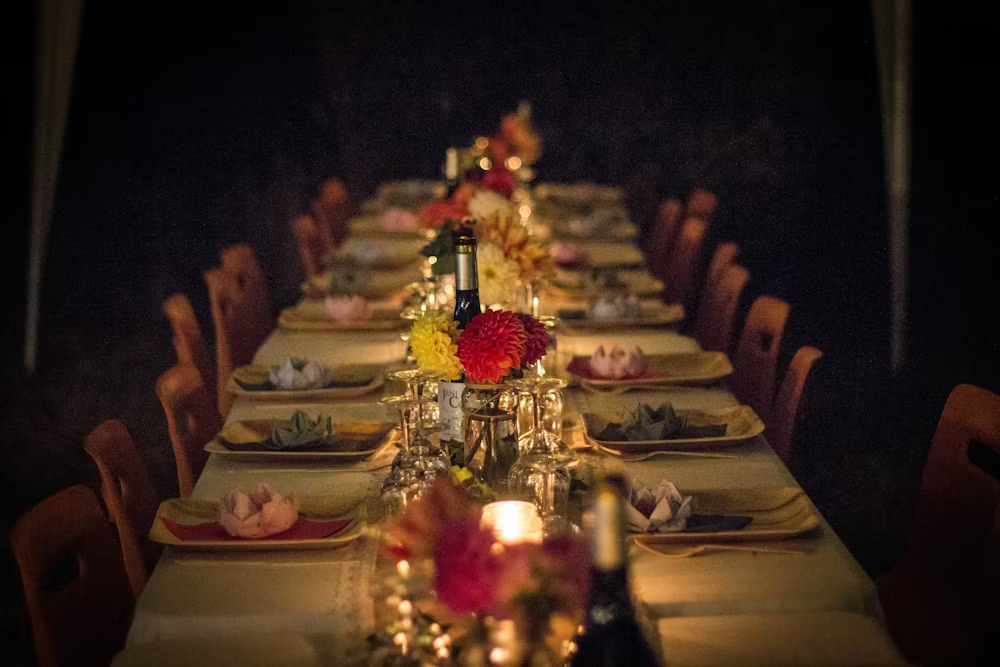
Fifty thousand dollars.
That was the number between us now. Not a figure on a spreadsheet, not a line item in a budget. A living thing that had crawled into every conversation, every memory, every interaction we’d once had, staining it all with resentment.
It had been casual when she asked. We were at a coffee shop in our hometown, the kind of place where they roast their own beans and remember your order. She’d been stirring a cappuccino and making plans for her wedding—a wedding that had somehow grown from a simple ceremony into a three-hundred-person affair with a budget that made my eyes water.
“You can afford it,” she’d said that day, like we were talking about picking up a dinner check instead of bankrolling a celebration. “It’s not like it would even hurt you.”
The thing was—it wouldn’t have broken me financially. My business had been doing well. Better than well, actually. The kind of success that surprised me sometimes when I looked at the numbers, that made me feel like I was getting away with something, like someone would eventually realize they’d made a mistake and come to collect.
Comfortable revenues. Steady growth. On paper, I could write a fifty-thousand-dollar check and not fall apart. I could do it without even checking my account balance.
But it would have hurt in all the other ways I’d spent the last several years learning to protect myself from.
Because it wasn’t really a request. It wasn’t “Would you be willing to help?” or “Is there any chance you could…?” It was an expectation delivered as a foregone conclusion, wrapped in childhood history and unspoken family contracts that had never actually been written down but that she seemed to know by heart.
“You’re the successful one,” she’d said, stirring her cappuccino with the kind of certainty that suggested she’d already won this argument before we started. “You owe me this.”
That word—owe—had snapped something clean in me.
I’d told her no. I’d tried to be calm about it. Tried to be careful. I’d explained about boundaries, about setting precedent, about how I loved her but I wouldn’t be underwriting a wedding that cost more than the house our parents had raised us in.
She had heard exactly none of that.
What she heard was betrayal. What she heard was the word no and translated it into a personal attack, into evidence that I’d forgotten where I came from, that I’d become selfish, that money had changed me into someone she didn’t recognize.
The Three Months Of Silence
The text inviting me to dinner came three months later.
Three months of group chats where my name was suspiciously absent. Three months of family photos I found out about after the fact—usually through my mother’s carefully casual mentions. Three months of my mom saying things like, “She just needs time,” like time had ever taught my sister anything except that people eventually gave in to pressure if you just waited long enough.
I sat at my desk and flipped my phone over again, rereading the message like the words might change if I looked at them from a different angle.
Let’s have dinner. Just us. Casual.
I could almost hear her saying it—her voice bright and rehearsed, the way it got when she was performing being fine with something she definitely wasn’t fine with. I tried to imagine the version of this dinner where we sat across from each other, exchanged awkward laughs about how ridiculous we were being, and agreed that we’d both said things we didn’t mean.
But here was the thing about my sister that I’d finally, after thirty-some years of shared history, managed to articulate: she rarely said things she didn’t mean. She said things that other people weren’t supposed to take literally. She said things that were technically requests but functionally ultimatums.
Big difference.
The Conversation That Changed My Perspective
“Are you going?” my wife asked that night, when I showed her the message.
We were in the kitchen of our apartment in Lincoln Park. She was rinsing cilantro in the sink, sleeves rolled up past her elbows, her movements efficient and practiced. I loved the way she always dressed exactly like herself, whether she was drafting contracts in her law office or making Tuesday-night tacos for us. There was no performance about her.
“I don’t know,” I said, leaning against the granite counter. “Part of me wants to just ignore it. Part of me wonders if maybe she’s actually ready to apologize.”
She glanced up, water dripping from her fingers, and I saw it then—the calculation behind her eyes. Something precise and careful turning over, the way a lawyer’s mind does when it’s evaluating evidence.
“What does your gut say?” she asked.
“My gut says ‘block the number, move to a different country, start fresh under an assumed name,'” I replied, attempting humor to cover the tightness in my chest. “My brain says it might be… a peace offering?”
My wife snorted softly, a sound that was equal parts affection and exasperation. “Your sister doesn’t do peace offerings. She does opening arguments.”
I smiled despite the anxiety coiling through me. “That’s pretty cynical, counselor.”
“It’s observational,” she said, turning off the tap and drying her hands on a kitchen towel. “She invited you, not us. She chose the word ‘casual’ on purpose. She knows you. She knows you’re more likely to show up if you think it’s low-stakes, if you believe there’s a chance she just wants to talk.”
I leaned against the counter, feeling the weight of that truth settle on me. “So you think it’s a trap.”
“I think,” she said, walking over and reaching up to straighten my collar—something it didn’t need, but that was the point—“that if it were truly casual, she would’ve called, not sent an oddly formal three-line text after ninety days of radio silence. Casual is how people talk when they’re pretending nothing’s wrong. Formal is how people communicate when they’re planning something.”
I’d married this woman for a lot of reasons. Her intelligence. Her laugh. Her absolute refusal to let me get away with anything less than truth.
“So what you’re saying is, I shouldn’t go,” I said.
She studied me for a moment, then shook her head. “I’m saying you shouldn’t go alone. And I’m saying that if you do go, you need to understand what you’re walking into.”
“Which is?” I asked.
“A negotiation,” she said quietly. “Disguised as a meal.”
The Loan Agreement
The next morning, I got to the office early. I was scrolling through emails when my wife called, her voice careful in that way it gets when she’s about to tell you something you’re not going to like.
“We need to talk,” she said.
Those words. Never good.
“What happened?” I asked, though part of me already knew.
“The draft came to my firm,” she said. “Not knowing it would land on my desk. It came from a generic email address, but once I saw the subject line, it wasn’t hard to connect the dots.”
My stomach dropped. “What subject line?”
“‘Family Assistance Loan Agreement – Draft,'” she said. Her voice was level, professional, but I could hear the careful anger underneath. “She’s persistent, I’ll give her that.”
The words felt like ice water poured directly into my veins.
“She’s actually trying to make it a loan?” I asked, my voice sounding thin and distant. “With documents?”
“And conditions,” my wife confirmed. “And collateral. All drafted in the kind of language that hopes you’ll trust the relationship more than your actual reading comprehension.”
I sat down slowly in my office chair. Outside my window, the city was going about its business, completely unaware that I was sitting here reprocessing an entire relationship through a new lens.
“You were going to tell me?” I asked, not accusing, just needing to know I hadn’t been kept in the dark on purpose.
“I was,” she assured me. “I was waiting to see if she mentioned it first. Sometimes people give themselves away. But the dinner invite moved up my timeline.”
“Okay,” I said. “What’s in it?”
“A lot of clauses,” she said. “Most of them unenforceable if challenged. Some of them dangerous if you sign without counsel. All of them banking on your need to look like the good guy, like the one who comes through in the end.”
She was right. That was exactly my default setting—had been for thirty-four years, actually. Reliable. Reasonable. The fixer of things. The one who absorbed impact.
“So what are you saying?” I asked.
“I’m saying that the loan itself is probably secondary,” my wife replied. “The real leverage is the threat of what happens if you refuse. She’s going to tell people you abandoned her. She’s going to rewrite this as a story about your selfishness.”
We didn’t cancel the dinner. My wife insisted on going, and I let her, because the alternative—walking into that meeting alone—suddenly felt dangerous in a way I couldn’t quite articulate.
The Restaurant Where Everything Happened
The next evening came too quickly. The city seemed to move around me without touching me. I worked, technically. Answered emails. Approved a proposal. Sat on a video call where my face nodded and smiled while my actual consciousness was somewhere else entirely, replaying fragments of childhood.
My sister crying on the front steps because she’d dropped her ice cream cone, and me—ten years old, proud to be the responsible one—handing her mine without thinking. My parents praising me for being “such a good big brother.” The hundred tiny moments where I’d been taught, not explicitly but insistently, that my job was to absorb the impact so she didn’t have to.
“You’re better with money,” they’d say years later, when I worked weekends and saved and skipped trips. “You’re more sensible. She’s just… not like that.”
Not like that.
“Artistic,” they called her. “Impulsive.” “Sensitive.” Words that softened the reality that she treated other people’s sacrifices as nothing more than scenery for her own story.
By the time we pulled up near the restaurant—a place in the Gold Coast with white tablecloths and a reputation for being the kind of establishment where important things happened—the sky had shifted from late-afternoon gold to that dim, bluish gray that makes car headlights look like streaks of liquid light.
“Drop me at the corner,” my wife said. “You go ahead and walk in. Text her you’re there. I’ll park and come in after you.”
I frowned. “You’re making an entrance.”
“I’m preventing her from improvising,” she replied. “If she sees us arrive together, she might step outside, try to pull you aside, manufacture a moment that’s half-private and half-public. This way, you’re simply ‘on time,’ and I’m an unforeseen variable.”
I couldn’t argue with the strategy. My sister loved improvisation—as long as she was writing everyone else’s lines.
“Okay,” I said. “I’ll go in.”
She squeezed my hand before I opened the door. “You don’t have to defend your ‘no’ tonight,” she said, her voice low and steady. “You don’t have to justify it or make it palatable or soften it because you’re worried about how she’ll feel. You just have to hold it.”
I nodded and stepped out into the cool November air.
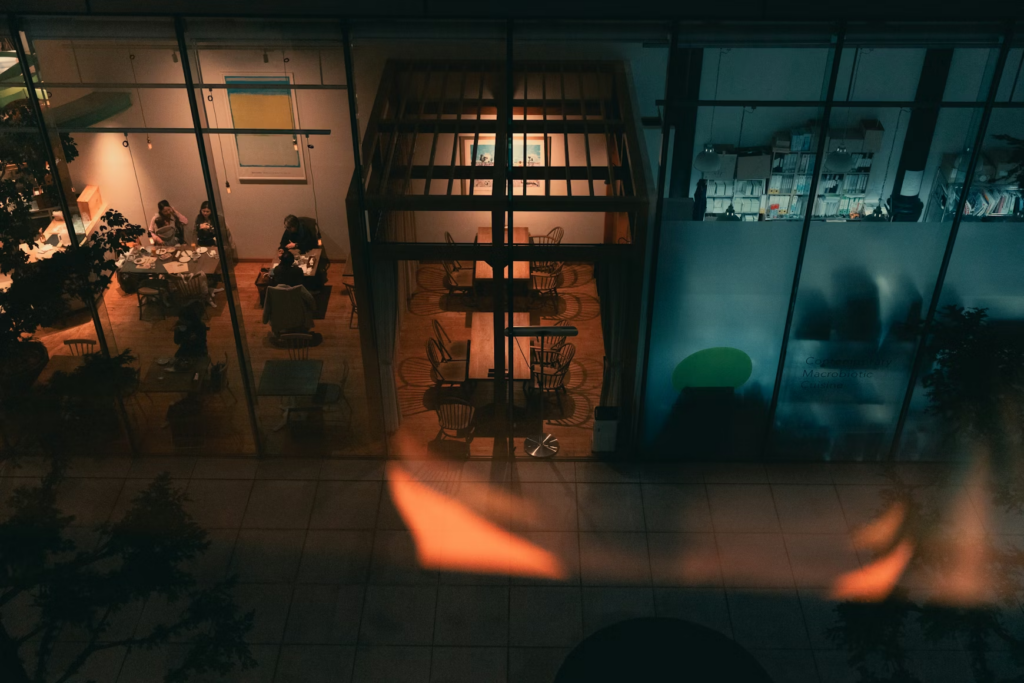
The restaurant was quieter than I expected for a Tuesday evening. Through the glass doors, I could see white tablecloths catching the soft amber of table lamps, the kind of lighting that made everyone look three percent more polished.
Inside, a host greeted me with a practiced smile that was equal parts welcoming and practiced.
“Reservation?” he asked.
“My sister booked it,” I said, giving her name.
He checked his tablet, nodded, and gestured for me to follow.
As we stepped into the main dining area, I noticed how empty it felt. A couple near the window murmuring over wine. A man at the bar staring into his phone. That was it. No hum of conversation. No clink of cutlery in layers. Just that hushed, almost staged quiet that makes your skin prickle.
The Moment Everything Revealed Itself
My sister sat at a table near the back. Straight-backed. Hands folded loosely in front of her like she was about to give a presentation to a board of directors. Three men in charcoal suits flanked the table—two on one side, one on the other. They stood when the host and I approached, not to greet me, but in that reflexive way that suggests a client has arrived.
My stomach dropped.
“Hey,” my sister said brightly, as if this were completely normal. “You’re right on time.”
No hug. No reaching across the table. No gesture that suggested anything other than business was about to happen. Just a gesture toward the empty chair across from her.
The host retreated. The men sat down only after I did.
“This is a bit formal for ‘casual,'” I said, attempting a smile. My voice sounded lighter than I felt—an old habit, smoothing the surface, making things palatable.
She laughed, a short, controlled sound that had no warmth in it. “You always overthink things,” she said, as if I’d made a joke and was being self-deprecating.
One of the men slid a folder onto the table. It was thick, crisp, neatly tabbed with what looked like color-coded sections.
“Let’s not waste time,” my sister said.
I looked at the folder but didn’t reach for it. “Waste time on what, exactly?” I asked.
“Your responsibility,” she said, and the word landed between us like a stone in still water.
The lawyer nearest her cleared his throat, assuming command of the air like they do—the way lawyers make you feel like they’ve been practicing this exact moment in their office for weeks.
“These documents outline an agreement,” he began, his index finger hovering over the folder like a conductor’s baton, “wherein you will extend financial assistance to your sister for her upcoming wedding. It’s structured as a loan, with favorable terms, to reflect the familial nature of the arrangement.”
He said the word familial the way someone might say “golden opportunity.”
As he spoke, he tapped on sections with a precise fingertip, drawing my attention to phrases I would’ve missed if I wasn’t looking for them: “collateralized against business assets,” “default procedures,” “remedies including but not limited to public disclosure of non-performance,” “shared liability for any existing informal obligations.”
It was meticulous. Thought out. Not emotional at all. Which somehow made it worse than if she’d just asked me directly.
I felt a familiar instinct rising in me—the urge to explain, to soften, to say something like, “I just need time to think about this,” as if the problem were scheduling, not coercion.
My sister watched me like a driver watching slow traffic: impatient for movement, confident it would eventually go the way she’d planned.
“You sign,” she said, tapping the folder with one perfectly manicured nail, “or I tell everyone you abandoned me. I’ll dispute past transactions. I’ll make it messy. You care about your reputation. I don’t.”
There it was.
No shouting. No dramatics. No appeal to emotion or shared history. Just leverage laid out like silverware. The threat wasn’t subtle. It didn’t need to be. She knew exactly where my old self would bend.
For a long moment, I didn’t speak. I let the silence expand, not because I was being dramatic, but because every possible response that would have come naturally to me was one I had retired from my repertoire.
The man nearest my sister glanced at me, then at her, a quick flicker of unease crossing his face. The other two stayed neutral, their professional masks intact.
“Say something,” my sister demanded, her smile faltering just slightly.
“I brought someone,” I said.
Her brows dipped. “What?”
“My wife,” I replied, turning slightly toward the entrance. “She’s parking.”
The words dropped into the space with a dull thud. It wasn’t the mention of my wife that caused the shift—it was the sudden realization that I hadn’t arrived alone like she’d planned, that her stage wasn’t as controlled as she’d assumed, that there was a variable in this equation she hadn’t accounted for.
“You didn’t say—” she began.
The door opened behind me with a soft chime. I didn’t have to turn to know it was her. I felt the room tilt slightly.
My wife didn’t stride in like a movie lawyer with sharp heels clicking against polished floors or a power suit announced with fanfare. She just walked in as herself—calm, observant, her eyes already cataloging the table, the faces, the folder, the energy.
She leaned down, kissed my cheek like we’d planned this together (we had, in a way), and sat beside me like there had always been a chair there waiting.
“Sorry,” she said to no one in particular. “Traffic was a nightmare.”
Then she turned to the three men and offered a small, professional smile.
“I’m his legal counsel,” she said simply. “And his spouse.”
The Shift In Power
The shift was immediate, almost imperceptible if you weren’t looking for it. One man’s hand stilled mid-adjustment of his tie. Another straightened in his chair like someone had reminded him of his posture. The atmosphere changed from pre-arranged performance to something closer to negotiation, to something where the outcome wasn’t guaranteed.
“This is a family matter,” my sister said quickly, her voice sharper than before.
My wife nodded, her expression sympathetic but unmoved. “That’s usually when things get complicated,” she replied.
She reached into her bag and placed her own folder on the table. Thinner. No tabs. No theatrical thickness. Just a quiet stack of papers that did not care whether anyone was impressed by its appearance.
“I reviewed a draft of these documents two weeks ago,” she said calmly, looking directly at the lawyer who’d just spoken. “They were circulated to my firm by my sister-in-law.”
A muscle in his jaw tightened. He didn’t deny it.
“They rely on representations that are factually inaccurate,” she continued, her tone carrying the kind of certainty that comes from having done this before, from having dismantled bad arguments.
“Inaccurate how?” he asked, his tone measured.
“Ownership,” my wife said. “And standing.”
She slid a single document from her folder and placed it in front of him. I didn’t have to read it to know what it was—the paperwork transferring my business assets into a protected structure, properly disclosed, properly recorded.
“The assets referenced here,” she continued, tapping near the clause about collateral, “were transferred into a protected structure last year. Properly documented. Properly recorded. Any attempt to assert liability against my husband personally would fail. Quite dramatically, actually.”
She didn’t raise her voice. She didn’t lean forward or smirk or posture. She just laid out the facts like she was reading the weather report.
The lawyers exchanged genuine glances now. Not the choreographed, we-anticipated-this kind, but the actual, we did not plan for this variable kind.
My sister leaned in, her eyes flashing. “That’s not what this is about,” she said, heat creeping into her tone.
“It is,” my wife answered gently, her voice carrying something that sounded like pity for the position my sister had maneuvered herself into. “Because threats only work if they’re enforceable. And right now, what I’m seeing are documents that attempt to use the impression of enforceability to compel consent.”
The words hung in the air. Compel consent. Said like a legal observation, but we all heard what clanged underneath—the recognition that what she was attempting crossed a line.
The lead lawyer cleared his throat. “We’re simply formalizing an agreement between family members,” he said, his voice taking on a defensive edge. “Everyone benefits from clarity.”
“Clarity is valuable,” my wife agreed. “But these provisions around ‘public disclosure of non-performance’ and ‘shared liability for undefined past obligations’—they’re not clarity. They’re leverage disguised as contract language.”
He bristled, just slightly. “No one is forcing—”
“Of course not,” my wife cut in smoothly. “He’s under no obligation to sign anything tonight. Or, frankly, ever. Especially not under the explicit threat that his refusal will result in reputational damage orchestrated by his own sister.”
All eyes flicked to my sister. Her smile was gone now, replaced by something tighter, less polished, more real.
“You’re twisting this,” she said to my wife. “This is between me and him.”
My wife turned to her, and her expression softened—but not in the way that made concessions.
“You’re right,” she said. “It is between you and him. Which is precisely why it concerns me when you try to drag his professional life and the integrity of his business structures into it as leverage.”
“I wouldn’t have to do any of this,” my sister snapped, her voice rising slightly, “if he’d just do the right thing.”
The right thing. There it was again—the assumption that morality was measured in how much you were willing to bleed for someone who never stopped asking.
“You mean paying for your wedding,” I said quietly.
“I mean not abandoning me,” she shot back. “After everything I’ve done for you.”
I blinked. “Everything you’ve… done for me?”
She leaned back, folding her arms across her chest defensively. “Who was there when Mom and Dad were on your case about you working too much? Who told them you needed space? Who defended you when you married her instead of someone they approved of? Who—”
“You mean the times you did the bare minimum of not actively undermining me?” I asked, surprised at the steadiness in my own voice.
Her eyes widened. “Wow,” she said slowly. “So that’s what you think of me.”
I exhaled, feeling something loosen in my chest. Something that had been tied up for a very long time.
“I think that for most of our lives, the pattern has been: you want something, you create a storm, everyone rushes to protect you from the consequences, and I quietly pay the price,” I said carefully.
She scoffed. “Oh please.”
“When you totaled Dad’s car sophomore year, who took the extra shifts to help cover the repairs?” I continued, my voice remaining level.
Her cheeks colored. “That was years ago.”
“When you dropped out of college—twice—who helped you get set up in a new apartment each time? Who drove to your new place and helped you unpack?”
“Stop,” she said, her voice rising.
“When your last relationship blew up because you spent your rent money on a ‘creative retreat,’ who wired you three months’ rent so you wouldn’t get evicted?” I finished.
Her hand slammed onto the table, making the cutlery jump. The couple at the window glanced over, then quickly away, embarrassed at having witnessed something private.
“I said stop,” she hissed.
“I’m not listing these to humiliate you,” I said, and I meant it. “I’m listing them because you keep talking as if I’ve never showed up for you. And that’s not true. I have. Over and over.”
“So what?” she demanded. “That’s what family does.”
“No,” I said quietly, the words arriving with surprising clarity. “That’s what I’ve done.”
My wife stayed silent beside me. Not because she had nothing to add, but because she understood that this was the part only I could say, the realization only I could articulate.
“You’re successful now,” my sister insisted, her voice taking on a desperate edge. “You have a house, a company, a wife who probably makes more than you—”
My wife’s lips twitched, but she didn’t correct her.
“—and I’m asking for one thing,” my sister continued. “One. And you’re acting like I’m trying to ruin you.”
“You’re trying to coerce me into signing legal documents under threat,” I said. “That’s not asking. That’s not even negotiating. That’s coercion.”
“I’m asking for help,” she said, her voice wavering.
“No,” I replied. “You stopped asking a long time ago. Now you’re demanding.”
The silence that followed was thick and electric, the kind of silence that marks a turning point.

The Aftermath
We left the restaurant without eating. My wife didn’t even look at the three lawyers, just picked up her folder and stood. I followed. My sister didn’t move. Didn’t call after me. Didn’t scream or cry or apologize. She just watched us walk away like she was calculating losses.
Outside, the November air felt different—cleaner somehow, though that was probably just my imagination.
For the first block, neither of us spoke. The city had regained its hum—car engines, distant sirens, fragments of laughter spilling out of bars. It all sounded normal, and that normalcy felt almost surreal given what had just happened in that room.
“You okay?” my wife asked, slipping her hand into mine as we waited at a crosswalk.
I nodded automatically, then stopped myself.
“I feel… not crushed,” I said. “Which is new. But not good, exactly.”
“Something ended in there,” she said. “Endings don’t usually feel good, even when they’re necessary.”
I thought about that. About how, in a way, something had ended long before that dinner, in the space between me saying “no” and her deciding to turn that refusal into a campaign of pressure and coercion.
“You handled yourself well,” my wife added quietly.
I huffed out a laugh. “I didn’t even say that much.”
“You didn’t justify,” she corrected. “You didn’t bargain with your own boundaries. You didn’t offer a half-measure just to smooth the edges. That’s development.”
I let the words sink in. A version of myself that didn’t negotiate my dignity in private, that didn’t offer concessions just to make things easier for everyone else.
The Long Road Forward
In the weeks that followed, the fallout came exactly the way I’d expected.
A pointed message from my mother: Your sister says you refused to help with the wedding. Is that true?
A more measured one from my father: We need to talk about what happened. Your mother is very upset.
Screenshots forwarded from a cousin, snippets of my sister’s narrative, alluding to betrayal without naming specific figures: He won’t even help his own family. Money changes people. I guess I know where I stand now.
Each time, the old script fluttered inside me, wanting to take over. Wanting me to send long explanations, charts of my financial contributions over the years, carefully worded paragraphs about the emotional labor I’d invested.
Instead, I replied with short, honest sentences.
To my mother: It’s true that I’m not paying for a $50,000 wedding. I love her, but I’m not doing that. If you’d like to talk about it calmly, I’m here.
To my father: I’m willing to talk, but not if the goal is to pressure me into changing my mind. My boundary isn’t negotiable.
To my cousin: You’re hearing one side. I’m not going to litigate this over text, but I’m okay with my decision.
The sky did not fall. The earth did not open. Some family members pulled back, at least temporarily. Others sent quiet messages of support they didn’t post publicly.
My sister did not contact me directly again.
The wedding, when it happened six months later, was smaller than she’d planned. I saw photos on social media—a tighter guest list, less elaborate decor. Still beautiful. Still expensive enough to make me wonder how they’d managed it.
I wasn’t invited.
For a while, that fact stung more than I wanted to admit. There were nights I’d lie awake thinking about the speeches I wouldn’t hear, the toasts I wouldn’t give, the snapshot memories I’d never have.
But underneath that ache was something sturdier. A growing recognition that I had finally stepped out of a role I’d never actually auditioned for, that I’d been cast in by circumstance and kept in by my own willingness to absorb the weight.
A few months later, my wife and I had dinner with friends. Someone asked how my family was, and I found myself answering in a way that was both honest and gentle.
“Complicated,” I said. “But clearer.”
On the drive home, my wife reached over and rested her hand on my knee.
“Do you regret anything?” she asked.
I thought of the restaurant. The folder. The threat. The look on my sister’s face when she realized her favorite tool had dulled.
“I regret that it got there,” I said. “I regret that she thought coercion was an option. I regret that we spent thirty years teaching her I would always come through no matter how she asked.”
“But the ‘no’?” my wife prompted.
I watched the traffic lights change, red to green, one car moving, then another.
“The ‘no’ is the only part I don’t regret,” I said finally.
She nodded, like she’d known that would be my answer but wanted me to hear myself say it out loud.
Later that night, as we climbed into bed, my phone buzzed with a new message. For a second, my heart jumped in that old, conditioned way, waiting to be asked for something, to have another boundary tested.
It wasn’t my sister. It was my mother.
I don’t like how things are between you two. But I’m proud you’re standing up for yourself. Love you.
I stared at those lines longer than I meant to. They weren’t a solution. They weren’t a miracle. But they were different than what had come before.
I typed back:
I love you too. I hope someday she and I find a healthier way to be in each other’s lives. But I can’t go back to how it was.
I hit send before I could soften it.
I lay awake for a while after the lights were off, thinking about the version of myself who had walked into that restaurant. The one who still half-believed he could earn safety by being endlessly accommodating, by saying yes to things that cost him integrity.
That version of me hadn’t entirely disappeared. He showed up sometimes—in boardrooms, in family group chats, in the way my throat tightened when someone said, “You’re the only one who can help.”
But there was another version now, one I was just getting to know. The one who could sit across from his own sister, look at a stack of papers, hear the words “sign or I’ll ruin you,” and choose himself anyway.
That version of me didn’t negotiate dignity in private anymore.
And once you realize you’re allowed to be that person, it becomes a lot harder to pretend you don’t know how.
What Do You Think About Standing Your Ground Against Family Manipulation?
This is a story about boundaries, about the cost of always being the reliable one, and about what it means to finally say no to someone who’s betting you won’t. Did you see the manipulation coming from the beginning, or did the restaurant scene shock you like it shocked him? Share your thoughts in the comments below and let’s talk about family dynamics, about the ways we’re conditioned to sacrifice ourselves for people we love, and about the strength it takes to protect your own boundaries even when it damages a relationship.
If you’ve ever had to set a boundary with a family member, or if you’ve struggled with the guilt that comes with saying no to someone who expects you to always say yes, please share this story with your friends and family. We need more conversations about the hidden costs of being the responsible one, about the ways that love gets weaponized into obligation, about the possibility of protecting yourself without losing your humanity. Sometimes the greatest act of love is knowing when to stop sacrificing yourself.
Let’s talk about boundaries. Let’s talk about family dynamics. Let’s talk about what it means to finally choose yourself. Your voice matters. Share this story. Tell your own truth.