I gave my husband one of my kidneys because I believed love meant sacrifice. I believed that the greatest measure of devotion was putting someone else’s life before your own, that marriage was about showing up for the other person in ways that demanded everything from you. I never imagined—not in my wildest, most catastrophic imaginings—that saving his life would be the precise moment he decided to destroy mine.
Not long ago, I donated a kidney to my husband, Nick. We had been married for fifteen years at that point, fifteen years of building a life together, of creating routines and memories and a family. Fifteen years of believing I understood him, of thinking our commitment was unshakeable, of trusting that the promises we’d made in front of a church full of people actually meant something.
But just two days after the surgery—two days after I’d woken up in a hospital bed with one of my organs permanently removed from my body, my side stitched and aching every time I shifted, my body still flooded with anesthesia and pain medication—he weakly said something that would echo through the rest of my life.
“You finally fulfilled your purpose. Let’s get divorced. The truth is, I can’t stand you. And I never loved you.”
I was still weak and groggy myself, my side wrapped in bandages that needed to be changed carefully, my body moving through the fog of post-surgical recovery. The morphine pump was within reach if I needed it, but I’d been trying to manage the pain without it, trying to stay alert and present.
I heard his words and thought, at first, that he was trying to be funny. Hospital humor. The kind of dark jokes people make when they’re scared or overwhelmed. I even managed a weak smile.
“Stop,” I whispered, my voice hoarse from the breathing tube they’d had down my throat during surgery. “The nurse will hear you.”
“I’m not joking, Rachel,” he said. His voice was calm, almost detached—the tone of someone discussing something mundane, like the weather or what to have for dinner. Not the tone of someone announcing the dissolution of a fifteen-year marriage.
Something inside me went quiet. Not peaceful quiet. The quiet that happens when you realize the ground beneath your feet isn’t solid.

The Donation and the Love I Believed In
When Nick became seriously ill—kidney failure that had progressed without warning, a condition that seemed to arrive suddenly and devastatingly—I didn’t hesitate. I moved through the testing process with the urgency of someone who understands that the clock is running out, that every day brings the possibility of decline.
When the transplant coordinator asked if I was completely sure, if I understood the lifelong implications, the risks, the fact that I would be removing a healthy organ from my body, I said, “Test me first. I don’t care what it takes. I don’t care how many appointments or how much time. I want to give him this.”
Nick squeezed my hand then, his expression filled with something I interpreted as love, with gratitude, with awe at what I was willing to do for him.
“You’re my hero,” he’d said, his voice thick with emotion.
In that moment, I believed him. I believed that this act of sacrifice would be the thing that bound us together forever, that would prove the depth of my commitment, that would show him how much he mattered to me.
I gave him my kidney because I loved him more than anything in the world. More than my own physical wholeness, apparently. More than my intuition. More than the part of me that might have recognized the warning signs of his cruelty.
But after getting what he wanted—after the surgery was complete, after my kidney had been transplanted into his body and was beginning to function properly, after the doctors had confirmed that the transplant was successful and that he would live a long and healthy life thanks to my sacrifice—he wanted to leave me.
The devastation was immediate and absolute.
“You’re my hero,” he had said.
Those words, which had felt so precious just days earlier, became a kind of curse.
The Threat and the Hospital Room
That wasn’t even the worst part of what happened in that hospital room, though. The worst part came when he explained, with the kind of clinical detachment that made me understand something had been fundamentally wrong with him all along, that he wanted custody of our daughter, Chloe.
Nick explained it as if he were talking about refinancing the house, as if custody of our child was simply another financial matter to be managed and optimized.
“Full custody makes sense,” he said, adjusting the blanket over his lap. “You’ll be recovering. You won’t be stable. The courts will understand that.”
I stared at him, trying to process what he was saying, trying to understand how the man I’d married had transformed into this cold, calculating stranger.
“I just saved your life!” I said, my voice rising despite the pain in my side, despite the medical monitors attached to my body.
“And I appreciate that,” he replied, his tone suggesting he was doing me a favor by acknowledging my sacrifice. “But appreciation doesn’t equal love.”
I feared for Chloe more than I feared for myself. I feared what his custody would mean for her, what kind of influence he would have, what kind of father he would become now that the mask had slipped completely.
The Home and the Realization
When I was discharged from the hospital and arrived home—actually home, to the house we’d bought together, the house where we’d brought Chloe home as a newborn, the house where we’d built what I thought was a life—walking up the stairs felt like climbing a mountain. Every step hurt. My incision ached. My body felt fragile, like it might break apart at any moment.
Chloe hovered beside me, careful not to touch my stitches. She was eleven years old, old enough to understand that something was seriously wrong, but young enough to still believe that love could fix most things.
“Does it hurt, Mommy?” she asked, her voice small and worried.
“A little,” I admitted, not wanting to burden her with the full truth of my pain. “But I’m strong.”
She hugged me gently, avoiding the bandages, and whispered, “I’m proud of you.”
Nick sat in the kitchen, scrolling through his phone, the phone that would later become a symbol of all his deception and planning. He didn’t look up when I came in. He didn’t ask how I was feeling. He didn’t acknowledge that I’d just given him the gift of extended life.
Not wanting to take Nick’s threat of divorce lightly—not wanting to believe he would actually follow through with such cruelty—I tried to get ahead of things. I consulted with a lawyer. I documented everything. I tried to prepare myself for what seemed like an impossible situation.
A week later, I logged into our joint bank account from my phone while sitting in my sister’s living room. My hands shook when I saw the transfers: five thousand dollars, ten thousand dollars, another eight thousand dollars. All of them withdrawals that I’d never approved. All of them disappearing from an account we’d built together over fifteen years of marriage.
That night, I confronted him.
“Where’s the money going?” I asked, holding my phone up, showing him the evidence of his deception.
He barely glanced at it. “I’m restructuring assets.”
“For what?”
“For my future.”
My breath caught. The casual cruelty of his response, the way he said “my future” as though I didn’t factor into anything anymore, as though he’d already decided I was irrelevant.
“What about our future?” I asked.
He gave me a cold look, the kind of look that makes you realize you’ve been sleeping beside a stranger for fifteen years.
“You still think there’s an ‘our’? I’ve already spoken to a lawyer about our divorce. It’s already in motion.”
I couldn’t breathe for a second. The realization hit me like a physical impact.
“You really waited until after surgery to do this to me?” I whispered.
He stood up slowly then, irritation flashing across his face like he was annoyed that I was making him explain himself.
“Don’t bother, Rachel,” he said.
“Don’t do what?”
He didn’t answer. He just walked upstairs, leaving me standing in the kitchen, trying to understand how the man who had squeezed my hand and called me his hero just days earlier had become someone capable of such systematic cruelty.
That silence told me everything.
The Legal Battle and the Desperation
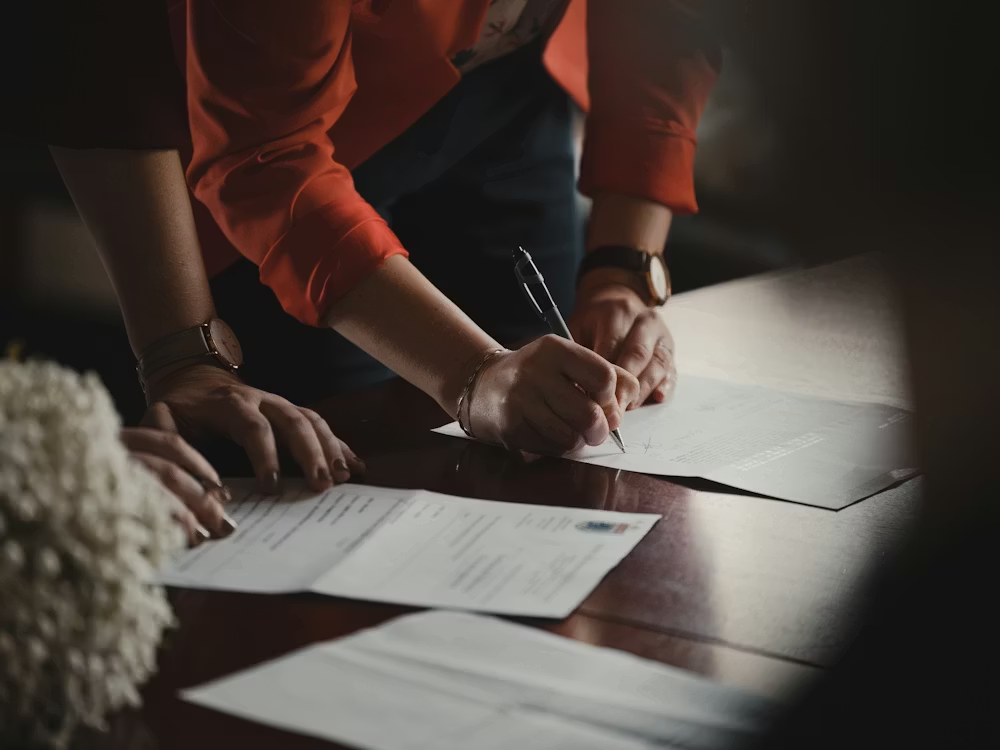
When I was officially served with divorce papers, the documents listed everything he wanted: primary custody of Chloe, full rights to the house, the car, the garage, and even my savings. There was even a statement questioning my “emotional stability” following surgery—as though my emotional turmoil at being betrayed and abandoned by my husband was a character flaw rather than a reasonable response to an unreasonable situation.
He’d retained the services of Daniel Martinez, the best divorce attorney in the state—the kind of lawyer that costs three hundred dollars an hour and wins cases through systematic destruction of the other party’s credibility.
So I needed my own representation too, but I didn’t have that kind of money. Especially not after Nick started funneling our funds elsewhere, moving assets into accounts that wouldn’t be discoverable, hiding money with the kind of systematic planning that suggested this had all been calculated well in advance.
I realized Nick wanted me to be left with nothing. No house. No security. Not even enough money to cover the long-term medical follow-ups that I would need for the rest of my life as someone living with a single kidney.
After the divorce proceedings began, that’s almost exactly what happened. I was left absolutely broke, living with my sister in a small guest bedroom, my daughter in a smaller room next to mine, both of us displaced from our home, both of us trying to understand how we’d gone from what I thought was a stable family to this.
The Night Before Court
The night before my next court appearance, Chloe climbed into my bed. She was eleven years old—old enough to understand divorce in the abstract sense, old enough to grasp that her parents were no longer going to be married, but still young enough that she believed love could fix things, that if we all just tried hard enough and loved each other enough, the family could be restored.
She sobbed against my chest, careful not to press on my incision.
“I don’t want to leave you, Mommy. I want to live with you,” she cried. “I don’t want to live with Dad.”
I held her carefully against my side, one hand on her back, one hand in her hair, trying to convey through physical contact what words could never adequately express.
“Don’t cry, my angel. I’ll figure something out, sweetheart. I love you. Everything will be okay.”
But even as I said it, even as I was trying to comfort my daughter, I knew I didn’t have a miracle. I didn’t have a secret weapon. I didn’t have the financial resources to fight a lawyer like Daniel Martinez. I didn’t have what I needed to win.
The Courtroom
The next morning, I wore the only suit that didn’t press uncomfortably against my scar—a navy blazer and matching pants that had fit me before surgery but that now hung a little loose, testament to the weight I’d lost in the weeks since my kidney donation.
Nick arrived with Daniel, both of them polished and confident, both of them moving through the courthouse hallway like they owned it. They didn’t acknowledge me. They didn’t even make eye contact. I was already, in their minds, a defeated opponent.
Inside the courtroom, I felt small. The judge sat above everyone else, elevated, powerful. Nick and Daniel sat at their table, leaning in close, their body language suggesting they’d rehearsed this performance multiple times.
Daniel spoke as if he’d rehearsed every syllable, each word carefully chosen for maximum impact.
“My client has been the primary financial provider throughout this marriage,” he said, his voice smooth and practiced. “Rachel has demonstrated erratic behavior, vindictiveness, and instability following major surgery. These are concerns that the court must consider when determining custody of a minor child.”
I gripped the edge of the table. Of course I was emotional. I’d lost a kidney and a marriage and my home and my sense of safety in the span of two weeks. I’d been betrayed by the person I’d trusted most. My emotional turmoil was not instability. It was a reasonable response to unreasonable circumstances.
When I tried to speak, to defend myself, to explain my perspective, Daniel objected.
“Speculation,” he said.
“Emotional conjecture,” he said again.
“Irrelevant,” he said a third time.
The judge nodded each time, seemingly accepting Daniel’s objections without question. Without representation, without legal knowledge, without the kind of sophisticated understanding of courtroom procedure that lawyers had, I barely had the power to finish a sentence.
I wanted to scream. I wanted to stand up and demand that someone listen to my side of this story, that someone consider what had actually happened, that someone understand the depth of Nick’s betrayal.
Then Chloe’s voice unexpectedly broke through the tension.
“Your Honor? May I say something?”
Every head in the courtroom turned.
My heart dropped.
The Tablet and the Evidence
She stood from the bench beside my sister, my baby looked so small in that moment, but she wasn’t shaking. She moved forward with a kind of quiet courage that reminded me she was my daughter—not just physically, but in her character, her willingness to face difficult things.
The judge studied her carefully, his expression shifting from irritation at the interruption to something more cautious.
“Young lady, you understand you’re under oath? That whatever you show or say must be the truth?” he asked.
“Yes, sir,” she replied. Her voice trembled, but she didn’t sit down. She remained standing, small but resolute.
He nodded slowly. “All right. What do you want to show the court?”
Chloe walked forward, unzipped her backpack, and pulled out her tablet. It had a cracked corner—a detail I mentally kicked myself for not having noticed before. I’d been so focused on survival, on fighting for custody, on trying to understand how my life had fallen apart, that I hadn’t paid attention to the condition of my daughter’s possessions.
The bailiff connected it to the courtroom display screen, the kind of large monitor that projected images so everyone could see clearly.
I had no idea what Chloe was about to reveal. I had no context for what was about to happen. My daughter, who I’d been trying to protect, who I’d been trying to shield from the full extent of her father’s cruelty, apparently had evidence I didn’t know existed.
When the first image appeared on the big screen, the entire courtroom seemed to stop breathing.
The screen showed a still image from a video file. The date stamp was from two weeks before my surgery—before I’d gone into the operating room to have my kidney removed.
My stomach dropped.
The bailiff pressed play.
Nick was sitting in our living room—the living room of the house I’d just lost—leaning forward with his elbows on his knees, speaking in a low voice to someone we couldn’t see. The voice sounded like a woman’s, but the identity remained unclear.
“I’m telling you,” Nick said in the recording, “once the transplant’s done, I’ll finally be free.”
The courtroom went absolutely silent. You could have heard the most delicate sound, the smallest noise. Everyone was completely focused on what was about to be revealed.
Nick’s lawyer tried to object, but the judge cut him off sharply.
“Let it play,” the judge said.
In the clip, Nick continued, completely unaware he was being recorded by his eleven-year-old daughter.
“I’ve already met with a lawyer. Assets are getting moved. The custody strategy is in place. She won’t see it coming. I’ll leave her with nothing.”
My ears rang. The words seemed to come from very far away, filtered through water or fog. I gripped the edge of the table to steady myself, my knuckles turning white from the pressure.
I couldn’t believe that he’d been planning this, that he’d been strategizing while I was preparing to have surgery, while I was signing consent forms that would allow them to remove one of my organs and transplant it into his body.
“She won’t see it coming,” the recording continued.
The woman laughed softly, a sound that made my skin crawl.
“And she really doesn’t suspect anything?”
“She’s too trusting,” Nick replied. “Always has been.”
I heard a faint rustling in the background of the video. Then Nick’s eyes shifted, his attention diverted from the woman he was talking to.
“Hold on,” he whispered. “I need to see what Chloe is doing.”
“Chloe? What are you doing?” he said in a normal voice, the voice he used with our daughter when he was trying to appear like a normal father.
The camera angle changed slightly as small hands adjusted the tablet, as my eleven-year-old daughter tried to figure out how to record something without drawing attention to what she was doing.
My daughter’s voice came through the speakers, small and innocent and breaking my heart.
“I’m trying to learn to record things with my tablet, Daddy.”
Several people in the courtroom gasped. They understood, even before the full implications became clear, that an eleven-year-old child had captured evidence of her father’s betrayal.
On the screen, Nick’s face tightened for just a second—a moment where his mask slipped and his true expression showed—before he forced a smile.
“That’s great, sweetheart. Let Daddy see,” he said, his voice taking on a different quality, a false friendliness that made me sick.
The video jerked violently. The image blurred, then the tablet hit the floor with a loud crack that echoed through the courtroom.
“Oh no,” Nick said too quickly, his tone shifting immediately. “It slipped.”
There was a pause in the audio. Then his voice dropped lower, colder.
“Chloe, listen to me. Don’t say anything to Mommy about the call Daddy just had. It’s adult stuff. You wouldn’t understand.”
Silence stretched across the recording.
“If you keep it between us, I’ll buy you a brand-new tablet. The newest one. Deal?”
My chest tightened. He was bribing her. He was asking our daughter to keep secrets from me, to be complicit in his deception, to trade her integrity for a material possession.
On the recording, Chloe answered hesitantly, her small voice barely audible.
“Okay.”
The video ended.
The courtroom didn’t breathe. No one moved. It was as though everyone understood that something fundamental had just shifted, that the power dynamics in the room had completely reversed.
I turned slowly toward Nick. His face had gone pale, the color draining away like someone had turned off a switch. But anger flickered under the surface of that pallor, a dark rage that suggested he was calculating something, planning his next move even as his world was collapsing.
“That’s edited!” he suddenly shouted, jumping to his feet. “It’s taken out of context!”
“Sit down,” the judge said sharply, his voice carrying an authority that made Nick’s knees bend immediately.
“It’s a lie!” Nick insisted, desperation entering his voice. “She doesn’t even know how to use that thing properly!”
The judge’s gavel struck once. The sound was final, definitive.
“Daniel, will you control your client?” the judge asked, looking at the attorney with something like disappointment.
Daniel muttered something to Nick, leaning close, his entire demeanor changing. This was the moment he realized he was representing someone who had systematically lied to him, someone who had created evidence of premeditation that would destroy his own case.
Nick sank back into his seat, the fight draining out of him.
The Judge’s Decision
The bailiff handed the tablet to the judge, who examined it carefully.
“You can sit back down, young lady. Thank you very much. We’ll return your tablet as soon as we’re done with it,” the judge said to Chloe.
She made her way back to her seat, but not before making eye contact with me. In that moment, I understood that she’d carried that secret alone for weeks. She’d maintained that knowledge, protected that evidence, kept that recording safe, all without my knowing, all without support, all because she understood that her mother needed saving.
The judge leaned forward, his expression deeply serious.
“This recording appears to be dated before the medical procedure in question,” he said.
“Yes, Your Honor,” the bailiff confirmed.
Daniel cleared his throat. “Your Honor, digital files can be manipulated. Anyone with basic technical knowledge can edit audio or video.”
“They can,” the judge replied evenly. “However, the burden now shifts. This court will order forensic verification if necessary. We have the tablet itself, which can be examined for metadata. We can verify when the recording was made.”
He turned to Nick. “Do you deny making these statements?”
Nick opened his mouth, then closed it. “It wasn’t like that.”
“That isn’t an answer,” the judge said. “Do you deny making these statements or not?”
Nick looked at Daniel. His lawyer didn’t speak. The silence was deafening.
I felt something I hadn’t felt in months. Hope.
The judge folded his hands. “Based on the preliminary evidence presented, the court finds serious concerns regarding Nick’s credibility and intent. The planning, the asset movement, the custody strategy detailed in this recording—these are not the actions of someone acting in good faith or in the best interests of the child.”
Nick’s shoulders stiffened. He was realizing, in real time, that his plan was unraveling, that his careful strategy had been undone by the daughter he’d tried to manipulate.
“Temporary full custody will be granted to Rachel, effective immediately,” the judge continued. “Additionally, all financial transfers made in the last sixty days will be reviewed and frozen pending further investigation. The division of marital assets will be reconsidered in light of this evidence.”
The words washed over me slowly, like warm water, like salvation.
Full custody.
Review of assets.
Nick’s entire plan was unraveling in real time.
“Court adjourned,” the bailiff called out.
Chloe walked back toward me, my sister hanging back to give us space. I dropped to my knees despite the ache in my side, despite the fact that bending hurt, and I pulled her into my arms.
“You were incredible,” I whispered against her hair.
“I became that way because you did first,” she said softly. “You sacrificed for me. I wanted to do something for you.”
That nearly broke me more than the betrayal ever had.
The Confrontation and the Truth
Outside the courtroom, the hallway buzzed with whispers. Reporters had somehow gotten wind of the story. Phone cameras flashed. People wanted to know what had happened, wanted to understand how an eleven-year-old girl had saved her mother.
Nick stormed toward us before we could reach the exit. His face was flushed red, his jaw clenched so tightly I thought it might crack.
“This isn’t over,” he hissed, his voice low enough that only I could hear.
I stepped slightly in front of Chloe, placing my body between him and my daughter.
“You heard the judge,” I said quietly.
“You think that video wins you everything?” he snapped. “I’ll appeal. My lawyer will—”
“You can try,” I said, my voice surprisingly steady. “But the truth is the truth.”
He leaned closer, and I could smell the anger on him, could sense the desperation.
“You don’t have the money to fight me,” he said.
“Maybe I don’t,” I replied. “But I have the truth. And more importantly, I have my daughter.”
That was when something inside him cracked. The careful control he’d been maintaining shattered like glass.
“I married you because I wanted a child!” he shouted. “You were so willing, so desperate to build a family. I figured you’d make it easy.”
My stomach turned, but I didn’t back away. I stood there and let him say it, let him reveal the depths of his calculation.
“I planned on leaving years ago,” he continued, his voice rough with years of suppressed anger. “But I had to wait. I needed control of the finances first. And then I got sick. When I found out you were a match, I couldn’t risk losing that. So I stuck around longer. I had to make sure you’d still be willing to give me your kidney.”
Every word felt like a blade, but also like clarification. This wasn’t something that had gone wrong. This was something that had been planned, calculated, designed specifically to exploit my love and my generosity.
“You used me,” I said quietly.
“Of course I did!” he snapped. “You made it so easy. You were so desperate to prove your love that you never questioned anything.”
What Nick hadn’t noticed was that Daniel had wandered over soon after he started his confrontation, apparently uncomfortable with being associated with someone who was now openly admitting to fraud and manipulation.
Daniel stepped forward slowly, his expression completely changed from the confident lawyer of moments earlier.
“Nick,” he said.
Nick turned, irritated. “What?”
“I can’t represent you anymore.”
Nick blinked, his brain apparently not processing what he was hearing.
“What are you talking about?”
“You deliberately misled this court,” Daniel said evenly. “And you just admitted a lot of things out loud in front of multiple witnesses.”
Nick laughed sharply. “You’re my lawyer!”
“I was,” Daniel corrected. “Past tense.”
He turned to me, and I saw something in his expression that surprised me: genuine respect.
“Ma’am, I can’t undo what’s been done, but you deserve proper representation. Actually decent representation,” he said. He pulled out a business card and handed it to me. “Call this number. Use my name. They’ll take your case pro bono. They believe in what you’re fighting for.”
Nick stared at him in disbelief.
“You’re choosing her?”
“I’m choosing ethics,” Daniel replied.
He turned and walked away, leaving Nick standing in the hallway, completely alone, his face flushing deep red with humiliation.
For the first time since waking up in the hospital with my husband asking for a divorce, Nick looked small. Diminished. Like the man he actually was underneath the performance—someone capable of exploitation, someone willing to use the people closest to him, someone fundamentally broken in ways that no amount of success or money could fix.
I looked down at Chloe, who was holding my hand tightly.
“It’s over,” I whispered.
“Not yet,” she said softly. “But we’re going to win.”
The Aftermath and the Healing
Back at my sister’s place that evening, I crouched carefully in front of Chloe, mindful of my healing incision, mindful of my daughter’s emotional state.
“You saved me,” I said simply.
She smiled, and I couldn’t hold back the tears. They came from a deep place inside me—tears of relief, of gratitude, of the realization that my child had shown more courage and wisdom than I could have mustered.
For the first time since surgery, I felt stronger than before. Not because I’d given something away, but because I’d stopped letting someone take from me. Not because I’d sacrificed successfully, but because I’d reclaimed my power.
Nick had tried to leave me with nothing. He’d calculated that I would be weak after surgery, confused by betrayal, unable to fight back effectively. He’d assumed I would accept his version of reality, that I would be too broken to defend myself and my daughter.
But he’d forgotten one crucial thing.
I wasn’t alone.
I had a daughter who loved me enough to carry the truth, to risk her father’s anger, to use the only weapon she had—her observations and her courage—to save me.
The lawyers that Daniel recommended took my case. The forensic analysis of the tablet confirmed that the recording was genuine, made weeks before the surgery, proof of premeditation. The financial investigation revealed that Nick had been systematically moving assets and planning his exit strategy for years.
I regained the house. I regained most of my assets. I was awarded full custody of Chloe, with supervised visitation for Nick that he eventually declined to participate in. Over time, he moved away, started a new life somewhere else, married someone else—probably another trusting woman who didn’t know the depths of his capability for manipulation.
But I didn’t spend my time thinking about Nick or what happened to him. I spent my time rebuilding my relationship with my daughter, taking care of my remaining kidney, and learning to trust again—not in people blindly, but in myself.
Chloe and I are building something new now. Not the life I’d imagined when I married Nick, but a life that’s real, that’s based on honesty and mutual support and genuine love rather than on the fantasy of sacrifice I’d been living in.
I gave my husband a kidney because I believed love meant sacrifice. I learned instead that real love doesn’t require you to give up your wholeness. Real love builds you up instead of tearing you down. Real love never asks you to become less so that someone else can become more.
What do you think about Rachel’s incredible journey from betrayal to victory? We’d love to hear your thoughts in the comments below or come share your reaction on our Facebook page. If this story resonated with you—if it reminded you about the importance of trusting your instincts even when love clouds your judgment, the incredible courage of children who stand up for what’s right, or the possibility of reclaiming your life after devastating betrayal—please share it with friends and family. These are the stories we need to tell, the ones that remind us that sacrifice without reciprocal care isn’t love, and that sometimes the people closest to us can surprise us with their capacity for cruelty—but also that we have the strength within ourselves to fight back.