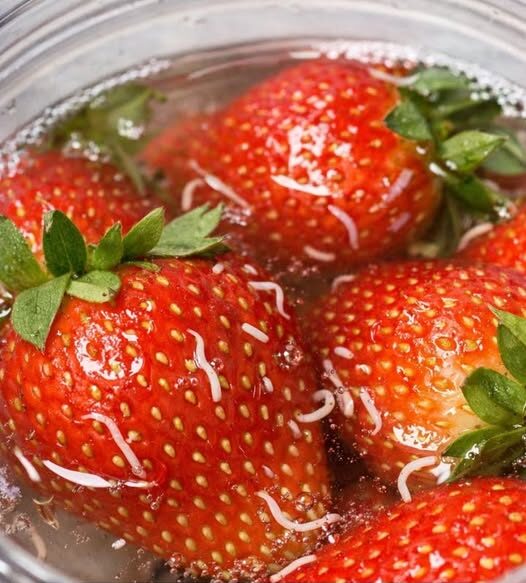
Why Tiny White Worms Sometimes Appear in Strawberries After a Salt Soak
Imagine a sunny kitchen. A bowl of ripe, red strawberries sits ready to be devoured. You decide to give them a quick salt water soak—a cleaning method popular on social media.
And then it happens.
Tiny white worms begin to wriggle out of the fruit and float in the water. Surprising? Definitely. Gross? A little. Dangerous? Not usually.
What Are These Tiny White Larvae?
Most often, they are the larvae of the Spotted Wing Drosophila (Drosophila suzukii), a small fruit fly that targets ripening berries. These larvae are tiny—just 1–3 millimeters—and translucent, which makes them hard to spot until they move.
Strawberries are perfect incubators: soft, juicy, and full of nutrients. Female flies use their serrated ovipositors to lay eggs just under the skin. Within days, larvae hatch and start feeding inside the fruit.
Why Salt Water Makes Them Appear
Salt water changes the environment. A tablespoon of salt per cup of water draws moisture out of the larvae, causing stress. This prompts them to wriggle out, making them visible in the bowl. Without this soak, many would remain hidden inside the berries.
Are They Dangerous?
While the idea is unsettling, the larvae are not known to carry harmful pathogens, and accidental consumption is unlikely to cause illness. Still, their presence can indicate that the fruit isn’t at peak quality, and taste or texture may be slightly affected.
How Growers Handle Spotted Wing Drosophila
Farmers use Integrated Pest Management, combining monitoring, natural predators, cultural practices, and selective treatments. Regular inspection, clean growing areas, and occasional pesticides help minimize infestation while keeping fruit safe and healthy.
Practical Tips for Home Strawberry Cleaning
Cold water rinse: Removes surface dirt and debris.
Salt water soak: Optional for detecting hidden larvae.
Vinegar solution: Mix 1 part vinegar to 3 parts water, soak briefly, then rinse. Helps reduce bacteria and pesticide residue without affecting taste.
Check for signs of spoilage—mold, mushiness, or foul odor—and discard if present. Fresh, firm strawberries can usually be enjoyed safely after washing.
The Bottom Line
Tiny white larvae in strawberries can be startling, but they’re rarely dangerous. Salt water just reveals what’s already inside. With proper washing, inspection, and safe storage, strawberries remain a sweet, healthy treat.
Enjoy your berries worry-free! Share this tip with friends to keep summer snacks safe and delicious.