Optical illusions have long fascinated scientists, educators, and the general public because they reveal how the human brain interprets visual information in ways that are not always straightforward or identical between individuals.
These visual phenomena are not only entertaining but also provide valuable insights into cognitive processing, attention, perception, and how the brain organizes and prioritizes incoming sensory data in real time.
From an early age, people are encouraged to engage in physical exercise to maintain bodily health, yet mental stimulation is equally important for maintaining cognitive flexibility and long-term brain function.
Activities that challenge the mind, such as puzzles, pattern recognition tasks, and optical illusions, encourage individuals to think critically and interpret information beyond surface-level appearances.
Instead of functioning like a camera, the human brain actively interprets visual signals, filling in gaps, resolving ambiguity, and sometimes creating multiple possible interpretations of the same image.
Optical illusions therefore highlight the difference between physical reality and perceived reality, showing that what we “see” is often influenced by context, focus, and mental processing.
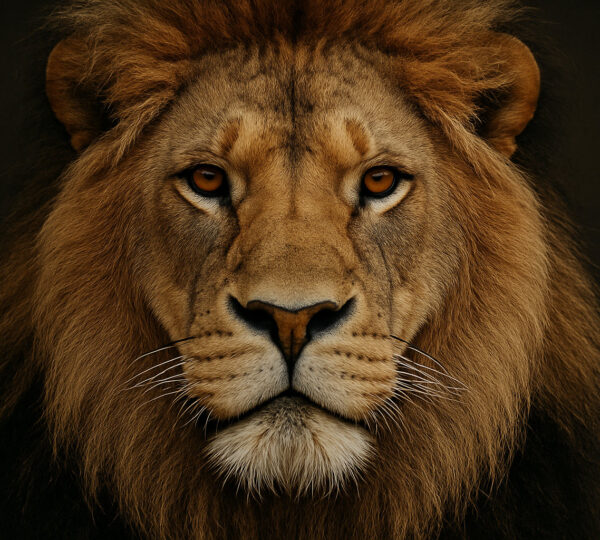
A widely discussed example involves an image that can be interpreted in two distinct ways, commonly described as either a tree or a lion depending on how the viewer’s mind organizes visual elements.
At first glance, most people tend to notice one dominant shape, while others may immediately perceive a different figure, demonstrating the variability of human perception.
However, when presented with ambiguous or overlapping shapes, the brain must make interpretative decisions that can lead to multiple valid perceptions of the same image.

This is why optical illusions are particularly useful in demonstrating how perception is influenced by both sensory input and internal mental frameworks.
In the case of the tree-and-lion illusion, the image is structured in a way that allows two separate interpretations to coexist within the same visual space.
Some viewers may initially focus on vertical patterns and branching shapes, leading them to perceive a tree as the dominant structure within the image.
Others may instead focus on facial contours, symmetry, and shadow patterns, which guide their perception toward recognizing a lion-like figure.
While optical illusions are sometimes informally linked to personality traits, scientific research does not confirm a direct or reliable connection between what someone sees first and their personality type.
However, these interpretations are often used as reflective exercises that encourage people to think about how they perceive the world and how quickly they form judgments.
From a cognitive perspective, the first thing a person notices in an image is more likely related to attention focus, visual bias, and environmental context rather than fixed personality characteristics.