The storm came faster than anyone in Millstone, Montana had expected.
I should have seen it coming—the weather reports had been warning about it for two days straight. But living in a small town teaches you to take those predictions with a grain of salt. We’d heard “storm of the century” warnings before, only to get a few inches of powder that melted by noon.
This time was different.
By the time I pulled my aging pickup truck into the gravel parking lot of my diner—Sarah’s Place, though most locals just called it “the diner”—snow was already falling in thick, heavy sheets. The kind of snow that doesn’t just dust the ground but transforms the entire landscape within minutes, blanketing everything in white so thick you can barely see ten feet in front of you.
I had absolutely no plans to open that night. It was a Tuesday in late January, already past six o’clock, and the roads were getting dangerous fast. Any sensible person would be home by now, hunkered down with supplies and a working fireplace.
But then I noticed them.
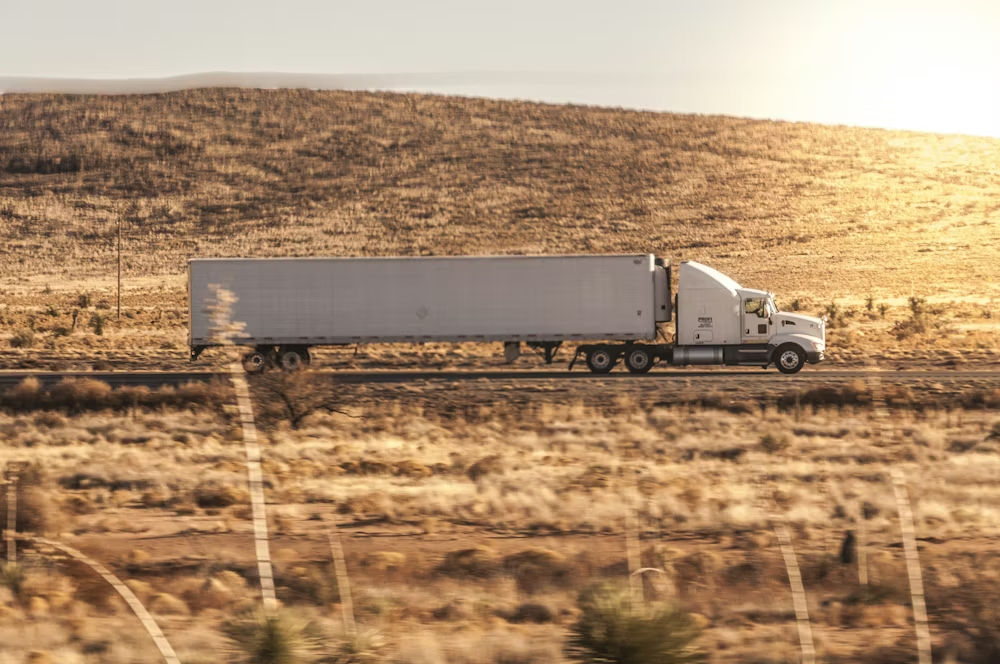
A line of eighteen-wheelers parked along the shoulder of Highway 87, their running lights cutting through the swirling flurries like beacons. And standing together in a tight cluster near the front truck, bracing against the wind that was picking up by the minute, were about a dozen men.
They looked cold. Exhausted. Lost.
I sat in my truck for a moment, engine still running, heater blasting, trying to decide what to do. The smart thing would be to drive home, lock my doors, and wait out the storm like everyone else in town.
But I’ve never been particularly good at doing the smart thing.
When a Stranger Knocks During a Blizzard
One of them noticed my headlights and started walking toward my truck. He was a big man—probably six-foot-three with shoulders that suggested years of hard physical work—with a thick beard that was already frosted white with snow and ice. His eyes, when they met mine through the windshield, looked tired in a way that went deeper than just one long day on the road.
I rolled down my window partway, letting in a blast of freezing air.
“Ma’am,” he said, his voice rough but polite, carrying the hint of a Southern accent, “I know this is asking a lot, but is there any chance you could let us into your diner for some coffee? We’ve been stuck here for going on three hours now. State police closed the roads about an hour ago. We’re not making it to the next truck stop tonight, that’s for damn sure.”
I looked past him at the other men huddled together, all of them in various stages of inadequate winter gear. Most had jean jackets or light work coats—nothing designed for a Montana blizzard that was rapidly becoming the real deal.
I hesitated.
Running Sarah’s Place alone was already challenging on a good day. I’d been doing it solo for almost two years now, ever since my husband David passed away suddenly from a heart attack at fifty-three. The diner was small—just twelve booths and a counter with eight stools—but keeping it running, cooking, serving, cleaning, managing inventory, all of it fell on my shoulders.
Twelve hungry truckers with nowhere else to go sounded completely overwhelming.
But then I really looked at their faces. These weren’t just inconvenienced travelers annoyed about a delay. These were exhausted men, probably worried about missed deliveries, lost income, families wondering where they were. Men who just needed a warm place to wait out something completely beyond their control.
My grandmother—the woman who’d originally opened this diner back in 1967—used to tell me something I’d never forgotten: “When in doubt, Sarah, feed people. A full stomach makes everything else more bearable.”
So I made a decision that would change my life, though I had no way of knowing it at the time.
I switched off my truck, grabbed my keys, and trudged through the already ankle-deep snow to the diner’s front door.
“Alright,” I called out to them over the howling wind. “Come on in before we all freeze to death out here.”
The Night the Diner Became Something More
The men followed me inside, stomping snow off their boots on the worn welcome mat and filling the booths in relative silence. They were polite, almost sheepish about imposing, each one offering some variation of “Thank you so much, ma’am” or “We really appreciate this.”
I flipped on all the lights, fired up the industrial coffee maker that took a few minutes to warm up, and surveyed the situation.
Twelve men. One of me. A storm that showed no signs of letting up. And a kitchen that I’d stocked for maybe twenty customers on a busy day, not a prolonged emergency situation.
This was either going to be a disaster or an adventure. I decided to choose adventure.
“Coffee’s brewing,” I announced to the room. “Give me about ten minutes and I’ll have some food coming out. Nothing fancy, but nobody’s going hungry tonight.”
A chorus of grateful voices answered me back.
I started with the basics—brewing pot after pot of strong black coffee that these men drank like water. Then I moved into the kitchen and started pulling out everything I had that could feed a crowd efficiently. Pancake mix. Eggs. Bacon. Hash browns. The breakfast staples that had kept this diner running for decades.
Before I knew it, I was in full rush mode, flipping pancakes on the griddle, frying bacon, scrambling eggs, and plating food faster than I had since David was alive and we used to handle the Sunday morning church crowd together.
The exhaustion and worry that had been etched on those men’s faces when they first walked in started to fade, replaced by something warmer. Laughter. Conversation. The kind of easy camaraderie that happens when strangers bond over shared adversity and hot food.
They thanked me over and over, calling me everything from “an angel in an apron” to “the best cook in Montana.”
But what I didn’t know—what I couldn’t possibly have predicted—was that letting them in that night would change far more than just their immediate circumstances.
It would transform my life and breathe new hope into an entire town that had been slowly dying.
The Long Night That Felt Like Coming Home
They stayed through the entire night, those twelve truckers and me. We took turns napping in the booths—I insisted they rest, they insisted I rest, we all ended up taking shifts. The wind howled outside like something alive and angry, rattling the old windows and piling snow against the door until we had to shovel it away every few hours just to keep it from blocking us in completely.
One of them—a broad-shouldered man from Tennessee named Roy with the softest, slowest drawl I’d heard since my cousin married a guy from Memphis—offered to wash dishes. Not asked if he could help, just rolled up his sleeves and started scrubbing without waiting for permission.
“Ma’am,” he said when I tried to protest, “you’ve been on your feet cooking for twelve hungry men for the past four hours. The least we can do is clean up after ourselves. Besides, my mama would come back and haunt me if she knew I let a lady do all the work.”
Another trucker named Vince turned out to have a beat-up acoustic guitar stashed in his rig. By three in the morning, when the storm was still raging and sleep felt impossible, he retrieved it and started strumming old country songs—Hank Williams, Johnny Cash, Willie Nelson—while the others clapped along and sang in rough, off-key voices that somehow sounded perfect.
It didn’t feel like a disaster anymore. It didn’t feel like being stranded in a blizzard in the middle of nowhere. It felt like a family reunion with relatives I’d somehow forgotten I had.
Outside, the snow continued falling relentlessly. By morning—or what passed for morning in the gray, snow-muffled light—the roads were completely impassable. The radio confirmed what we could already see through the windows: no plows for at least another twenty-four hours, maybe longer. The state was dealing with multiple highway closures across the entire region.
We were officially stranded, and that meant I needed to think strategically about supplies.
I did a mental inventory of my pantry and walk-in cooler. I had plenty of coffee, thank God—that was non-negotiable. But feeding twelve additional people three meals a day for potentially multiple days? That was going to require some creativity and careful rationing.
When Strangers Become Family
Roy noticed me pacing near the kitchen, probably doing that thing I do where I chew my bottom lip when I’m worried about something.
“You alright, Miss Sarah?” he asked, concern evident in his voice.
I gave him what I hoped was a reassuring smile but probably looked more like a grimace. “Just doing some math in my head. Trying to figure out how to stretch ten pounds of flour and five dozen eggs into three days of meals for thirteen people.”
He looked at me for a long moment, then turned to face the room.
“Boys,” he announced, his voice carrying that natural authority some people just have, “time to earn our keep. Miss Sarah here has been taking care of us, and now we’re going to take care of her and this place.”
And just like that, Sarah’s Place transformed into the most efficient operation I’d ever seen.
These men—who spent their lives driving thousands of miles each week, who lived in the cabs of their trucks and ate at rest stop diners and knew how to make do with whatever resources they had—suddenly became the best staff I’d never hired.
Vince grabbed a shovel from my storage closet and spent the better part of the morning clearing snow, creating paths between the trucks and the diner, making sure we could access vehicles if we needed supplies or if someone had an emergency. Another trucker named Dennis—a quiet guy from Oregon who barely said ten words the first night—noticed the persistent drip-drip-drip from under my kitchen sink and fixed the leaky pipe using parts he somehow improvised from his truck’s tool kit.
One even patched a long tear in the vinyl upholstery of booth number seven, the one I’d been meaning to fix for six months, using duct tape and such a steady hand that you could barely tell it had been damaged.
They weren’t just grateful for the shelter and food. They were invested. They cared.
The Meal That Felt Like More Than Food
The second night was even warmer than the first, in that way that has nothing to do with temperature and everything to do with human connection.
We made an enormous pot of stew using every canned vegetable I had in stock, some leftover brisket I’d been saving, and pretty much every seasoning in my cabinet. It simmered on the stove for hours, filling the diner with a smell that made everyone’s stomach growl in anticipation.
Vince played his guitar again, this time teaching some of the other guys simple chord progressions. Eli—a wiry man in his late fifties who’d been driving trucks since before I was born—told stories about the weirdest roadside diners he’d visited in his thirty-year career. There was one in Nevada where the owner kept a pet snake behind the counter. Another in Louisiana that served alligator burgers that were apparently “surprisingly delicious.”
When I finally sat down to eat my own bowl of stew, Roy slid into the booth across from me and said something that hit me harder than he probably realized.
“You know,” he said quietly, “this place feels like home. Real home. Not just a roof and four walls, but the kind of place where you want to be.”
My throat tightened and I had to look away so he wouldn’t see the tears suddenly burning in my eyes.
Because the truth was—the truth I’d been avoiding for two years—that since David passed away, this diner hadn’t felt like much of anything to me. It was just the thing that kept me busy. The thing that gave me a reason to get out of bed in the morning. The thing that prevented me from sitting alone in my empty house wondering what the point of any of it was.
The diner had been my lifeline, yes. But it hadn’t been my life.
The laughter and warmth filling that room, the easy companionship, the sense of purpose that came from taking care of people who actually appreciated it—that was something I hadn’t felt in longer than I wanted to admit.
When the Storm Ends But Something New Begins
On the morning of day three, the snow finally stopped.
The sudden silence was almost eerie after two days of constant wind and the sound of snow pelting against the windows. When we opened the front door, we found ourselves looking at a world completely transformed—snow piled so high against the building that it nearly reached the windows, the parking lot invisible beneath several feet of white, the highway completely erased as if it had never existed.
But in the distance, we could hear the low rumble of heavy machinery. The plows were finally getting through.
A local farmer named Jim Harrison came by around noon on his tractor—one of the few vehicles that could navigate through snow this deep—and told us the main highway was being cleared section by section. We’d likely be able to drive out by sundown, he said, as long as we took it slow and stuck to the main roads.
And just like that, it was almost over.
I tried not to feel sad about it, but I absolutely did. These twelve men who’d been complete strangers seventy-two hours ago had become something more. They’d filled a space in my life I didn’t even fully realize was empty.
The truckers gathered their belongings and insisted on helping me clean every inch of the diner before they left. They stacked chairs, mopped floors, scrubbed tables, and cleaned the kitchen until everything gleamed.
Before climbing into his truck to leave, Roy approached me with a folded piece of paper.
“Look,” he said, shifting his weight from foot to foot in a way that suggested he was nervous about something, “I know this wasn’t exactly your plan for the week. But what you did for us? Opening your doors, feeding us, making us feel human when we were just cold and tired and stuck? That was special. That was real kindness. So we got to talking last night after you went to sleep…”
The paper had a phone number, a name I didn’t recognize, and the words: “Food Network—Regional Producer.”
I blinked at it, confused.
Roy scratched the back of his neck, a sheepish grin spreading across his weather-beaten face. “One of the guys, Nate, he used to haul equipment for TV production companies. Said he still knows some people in that world. We told him about you and this place, and he made some calls. You’ve got a real story here, Miss Sarah. The kind people need to hear about.”
I laughed it off, assuming they were just being sweet, trying to find some way to repay me for a few meals and some coffee.
But I kept the paper.

The Phone Call That Changed Everything
Later that week, after all the truckers had moved on and the snow had melted into dirty gray slush on the sidewalks, after life had supposedly returned to normal, my phone rang.
The woman on the other end introduced herself as Melissa Chen, a producer for the Food Network. She explained that she’d heard about what happened during the blizzard—about the stranded truckers, the impromptu shelter, the kindness of a small-town diner owner who’d opened her doors when she absolutely didn’t have to.
She wanted to know if I’d be interested in talking about it on camera.
I nearly dropped the phone.
“I think you’ve got the wrong person,” I stammered. “I just made some pancakes and coffee. It wasn’t anything special.”
“Actually, Mrs. Patterson, that’s exactly what makes it special. It was simple kindness in action. And in the world we’re living in right now, people are desperate for stories about human beings taking care of each other. Would you at least think about it?”
I thought about it for approximately three seconds. Then I said yes.
One interview turned into three. A week after that initial phone call, a small camera crew showed up at the diner to film what they called a “human interest segment” about community and compassion.
They asked me to cook on camera—my famous biscuits and gravy, the recipe I learned from my grandmother—and I swear to God I hadn’t felt that nervous since my wedding day thirty-one years ago. My hands were shaking so badly I almost dropped the whisk.
But the part that resonated with viewers, the part that Melissa told me later made people stop scrolling and actually watch, wasn’t the food. It was the story behind it. The way twelve strangers and one lonely widow had created something rare and beautiful, even if only for forty-eight hours. The proof that kindness still existed, that people still helped each other, that community could form in the most unexpected circumstances.
When Everything Changes at Once
By the time the segment aired on Food Network during a Saturday afternoon show about small-town American diners, I had already started noticing changes.
People I’d never seen before were showing up. Not locals from Millstone—I knew all two hundred and forty-three of them by name—but travelers from other towns, other states even, who’d apparently heard about “the diner from the blizzard story.”
After the segment actually broadcast, things went completely crazy.
My phone rang constantly. My email inbox—which usually contained nothing but spam—suddenly had hundreds of messages. The diner’s ancient Facebook page that I’d barely known how to set up went from seventeen followers to seventeen thousand in less than a week.
One woman drove all the way from Boise just to tell me she’d seen the story and cried into her oatmeal because it reminded her that good people still existed in the world.
Someone I’d never met started a GoFundMe campaign with the title “Keep Millstone Diner Running Forever.” I didn’t even know about it until my niece called me, crying, to tell me it had raised over twenty-five thousand dollars in two weeks.
Twenty-five thousand dollars.
I couldn’t comprehend it. For two years I’d been scraping by, barely keeping the lights on, using duct tape and prayers to keep the ancient appliances running. And suddenly I had more money than I’d seen in years, all because I’d made pancakes during a snowstorm.
I used that money to buy a new commercial fryer—the old one had been making concerning noises for six months. I finally fixed the leaky roof that turned booth number three into a water feature every time it rained. I replaced the cracked front windows I’d been taping up every winter for the past five years.
But the real change—the one that mattered most—wasn’t about the diner’s infrastructure.
It was about the town.
How One Act of Kindness Saved an Entire Community
You see, Millstone had been dying for years. Slowly, painfully, inevitably.
The lumber mill closed in 2015, taking seventy jobs with it. The high school combined with the next town over in 2017 because we didn’t have enough students to justify our own building. Young people left for college and never came back. Families moved to cities where there was actual work, actual opportunity, actual futures.
Main Street, which had once been the thriving heart of our community, had become a collection of empty storefronts and faded “For Lease” signs. The hardware store closed. The pharmacy closed. Even the gas station was only open three days a week because the owner couldn’t afford to staff it full-time anymore.
People—the ones who remained—had stopped hoping. They’d accepted that Millstone was destined to become one of those ghost towns you read about, the ones that show up on lists of “America’s Forgotten Places.”
But then something unexpected happened.
Suddenly, there was traffic through town again. Travelers specifically routing their trips to stop at “the kindness diner.” People walking Main Street, taking photos, exploring.
The bakery across the road—Maggie’s Sweet Shoppe, which had been on the verge of closing for months—started opening earlier to catch my breakfast overflow. She hired her teenage grandson to help. Then she hired two more part-time workers when business kept growing.
The antique shop next door expanded into the empty space beside it, filled it with vintage Montana memorabilia, and started advertising as “The shop next to the famous diner.”
The bed and breakfast two blocks over, which hadn’t had a guest in months, suddenly needed to start turning people away on weekends.
And then Mayor Patterson—no relation, different family entirely—did something that felt almost too perfect to be real.
She declared the third Friday of every February to be “Millstone Kindness Weekend.” It started small that first year—free coffee at local businesses, neighbors helping neighbors shovel walks, community potluck dinners. But last year, a charter bus full of tourists from Chicago came specifically to experience it, to “see the town that kindness built.”
A charter bus. To Millstone, Montana. Because of pancakes and coffee during a blizzard.