Some people carry a story so layered, so quietly extraordinary, that it takes the rest of the world a while to catch up. Briel Adams-Wheatley has been living hers out loud for years, on camera, in comment sections, on talk show couches, and most people still can’t quite believe it’s real. Born without any limbs, adopted across continents, raised in a family of fourteen, married, transitioned, and now commanding an audience in the millions. At 26, she has lived more chapters than most people write in a lifetime.
And yet, the question people ask most isn’t about her medical history or her advocacy work. It isn’t even about the makeup videos that made her famous. The question that floods her comment sections, the one that follows her across platforms and keeps resurfacing no matter what she posts, is about her husband. How did he handle it? What did he actually say when she told him?
Recently, Briel and her husband Adam sat down and finally answered it. What they said is worth paying attention to, not just as a story about one couple, but as a genuinely uncommon portrait of what it looks like when someone loves a person, not a version of them.
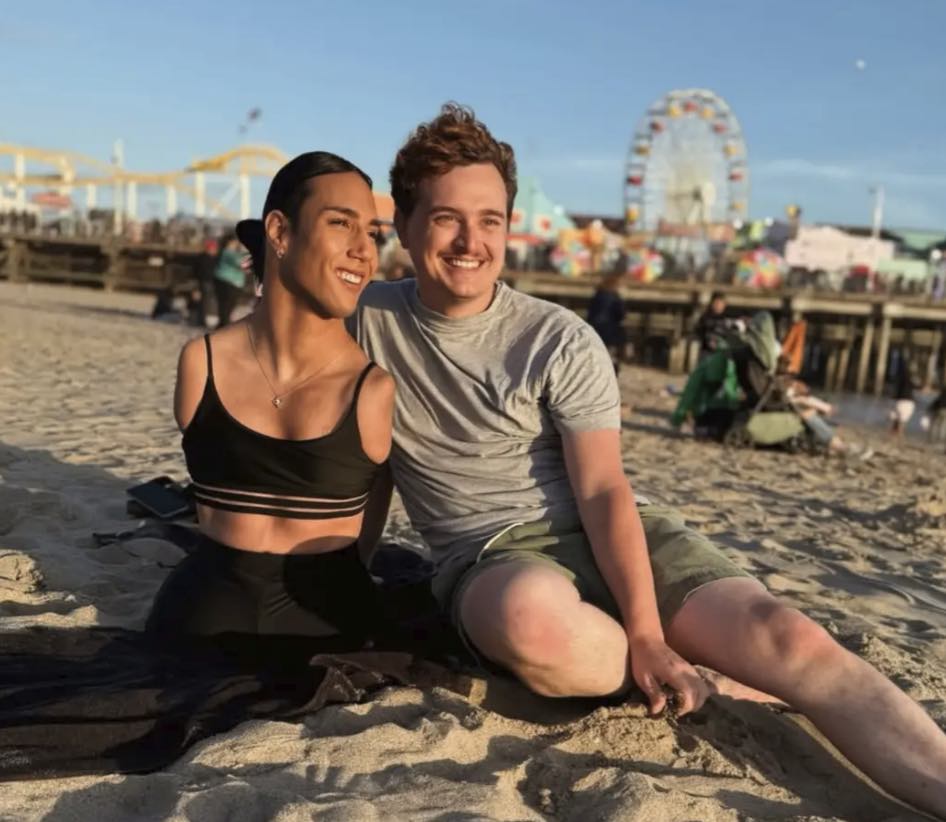
Who Is Briel Adams-Wheatley?
Briel was born in São Paulo, Brazil, without any limbs due to Hanhart Syndrome, a rare congenital condition characterized by malformed or absent arms and legs, among other physical features. Her parents had attempted an abortion too late, and she survived. Unable to financially support her, her mother put her up for adoption, and at just nine months old, a family in Utah adopted her into a household that would eventually include 14 children.
Hanhart Syndrome comes in five distinct types, with severity varying widely between individuals, and it is extraordinarily rare, with only approximately 30 medically confirmed cases reported between 1932 and 1991. Early theories suggested genetic causes, while a more recent hypothesis points to hemorrhagic lesions (small bleeds) during prenatal development disrupting blood flow to the developing limbs. For Briel, the result was complete absence of arms and legs, a presentation severe even by the condition’s already rare standards.
Growing up in Kaysville, Utah, the approach of Briel’s adoptive mother shaped everything. Her mother banned her siblings from doing things for her, insisting that Briel figure out how to do things herself, a decision that looked harsh to many people on the outside. Doctors eventually concluded there wasn’t really anywhere to attach prosthetics anyway, and Briel has said she believes she became more independent without them. That enforced self-reliance became the foundation she’d stand on for the rest of her life.
Her adoptive mother encouraged her to climb stairs on her own and take part in dance at school, and Briel went on to compete in dance competitions in high school, where she also began experimenting with makeup, on and off stage. That combination of movement and artistry would eventually build her entire public identity.